How long do pianos last? An honest look at age
A well made acoustic piano can stay playable for 50 to 100 years, but its playing parts wear out long before its frame does. Here is what each figure really measures, and what to check on an older instrument.
How long do pianos last? A well made acoustic piano usually stays playable for 50 to 100 years, and some last longer. Its frame and soundboard outlive its playing parts by decades, which is why makers put a piano's strongest years in its first 25 to 30. Age alone settles very little. Use history and climate settle most of it.
I choose our pre-loved pianos in Japan myself, or through partners who know what I look for, and each one is checked in our Mount Waverley workshop before it reaches the showroom floor. Pre-loved is how we describe them; second-hand is how most people search for them. It means I spend a lot of time looking at Yamahas and Kawais built in the 1970s and 1980s and judging what is left in them, and the honest finding is that two pianos of the same year can be decades apart in condition.
Why do the answers range from 25 years to 100?
Because the question hides two different ones. Kawai's own advice line puts a quality acoustic piano at 50 to 100 years or more with proper care, and points out that instruments built in the 1800s are still being played. Yamaha Australia's buyer FAQ says the opposite in tone: pianos do not improve with age, and the complexity of the mechanism and the string tension on the soundboard mean a piano's finest years are its first 25. The Australian dealer Logan's Pianos puts that window at the first 20 to 30 years, after which it says most pianos need a fairly substantial refurbishment whatever their build quality.
Both can be true, because they are measuring different things. The 50 to 100 year figure describes the structure: the frame, soundboard, bridges and case. The 20 to 30 year figure describes the playing parts: hammer felt, action cloth, bushings and strings. A piano is built so that the second group can be serviced and replaced, which is why an older instrument is usually only written off once something in the first group has failed.
What wears out first on an older piano?
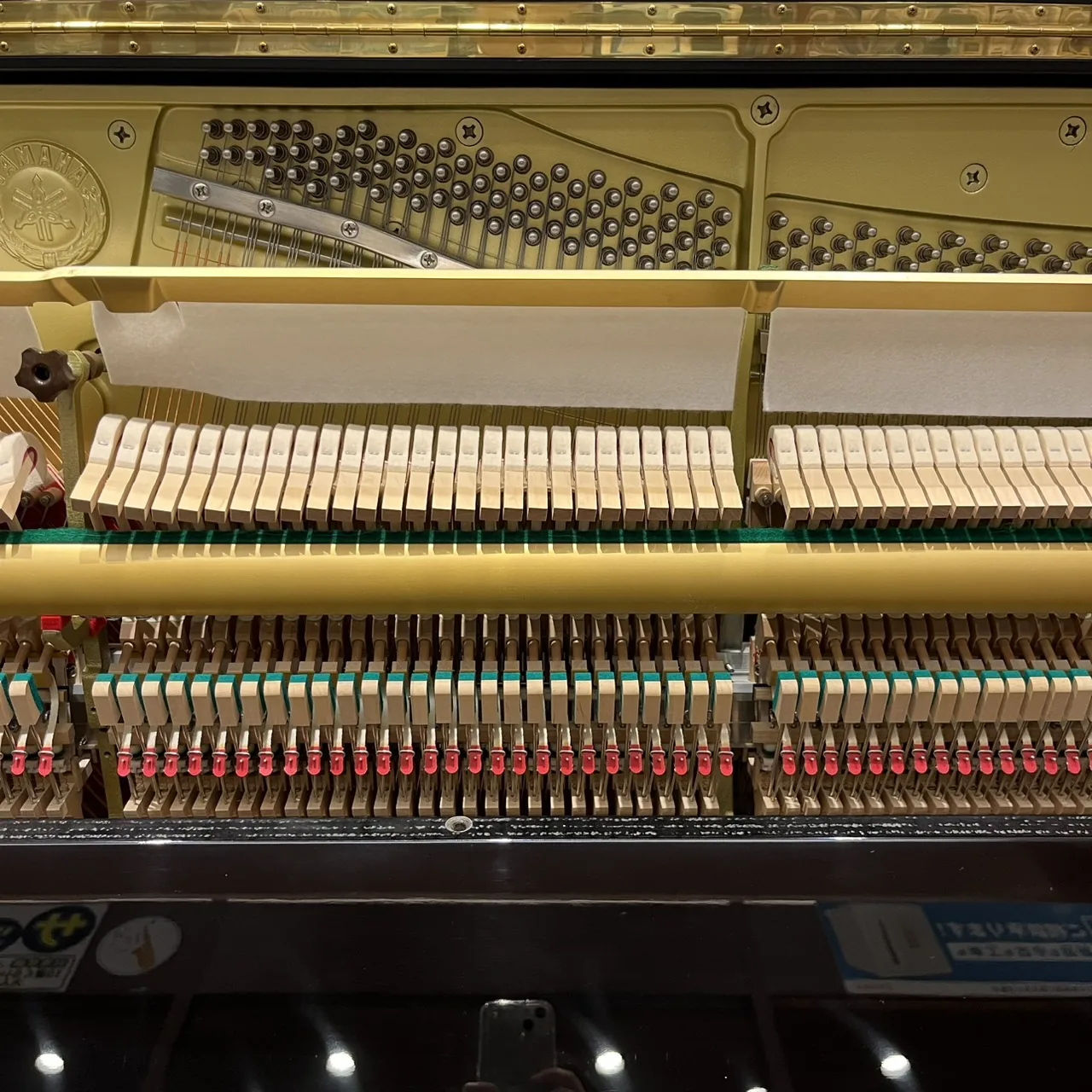
Felt, before anything else. Living Pianos, a dealer and technician in the United States, lists the checks: how much felt is left on the hammers, whether the key bushings make a clicking sound, which means the felt in them is worn, and rust around the strings and pins. Yamaha Australia's FAQ names the two problems that actually decide a piano's fate. Long spells of high humidity corrode strings, key pins and tuning pins, and it says there is no way to repair corrosion damage, only to replace the parts. Long spells of low humidity shrink and crack the soundboard, bridge and pin block, which it says can be very expensive to repair, particularly on older instruments where fewer parts are available.
| Part | What four decades of playing usually does | Can it be renewed |
|---|---|---|
| Hammer felt | The strings cut grooves into it and the tone hardens | Yes, by reshaping or replacement |
| Key and action bushings | The felt compresses, so the key develops play and clicks | Yes, routine technician work |
| Strings and tuning pins | Surface rust in damp storage, and tuning that holds less well | Yes, by restringing |
| Soundboard and bridges | Can crack if the piano has been kept very dry | Repairable, and costly |
| Pin block | Can loosen its grip on the tuning pins | Only in a full rebuild |
That last row is the line the trade draws. In Piano Buyer's valuation guide, a piano counts as rebuilt only if its pin block has been replaced; restringing without one is reconditioning, not a rebuild.
Is a 40 year old piano worth buying?
The trade disagrees with itself here, and it is worth knowing who is saying what. Kawai Australia, which sells new pianos, says Japanese imports are on average between 30 and 40 years old and are nearing the end of a working piano's expected lifespan before they arrive in Australia, after decades of near daily use. Living Pianos, which sells older pianos, says there is no set amount of time a piano will last and that the year of manufacture tells you very little about it.
From choosing instruments in Japan, my reading is that the year tells you which parts to look at, not whether to walk away. A piano played casually in a lounge room and tuned each year is in a different state at 40 than a teaching room piano is at 20, and Living Pianos makes the same point from the other end: in a school or a restaurant a piano can be worn out in as little as ten years. So look at wear rather than the date. Check the hammer grooves, press the keys for side-to-side play, look for rust on the strings, and ask when it was last tuned and by whom. Our pre-loved piano checklist works through that in order, our serial number lookup will date the instrument, and if the piano is a Japanese domestic model, our guide to grey market Yamahas covers what that status does and does not mean.
What shortens a piano's life in a Melbourne home?
Indoor dryness, mostly, which is a winter problem here rather than a summer one. Ducted heating pulls the moisture out of a room for months at a time, and that is the condition Yamaha Australia describes as cracking soundboards and pin blocks. We have written separately on what humidity a piano needs in Australia. The other avoidable harm is simple neglect: Living Pianos notes that a piano left untuned for five to fifteen years can be strained when the tension is brought back up to pitch, because the accumulated string tension has to be restored all at once. Annual tuning and servicing is what keeps the structure, which is the part that cannot be easily replaced, doing the job it was built for.
Are pre-loved pianos worth anything?
Yes, though less in resale than most owners expect, and the number is set by condition rather than by the badge. Piano Buyer's guide says a piano drops sharply in value over its first five to ten years, then loses only about 1.5 to 2 per cent a year against a comparable new instrument, and since new prices tend to rise 3 to 3.5 per cent a year, the cash figure can look as though it is creeping up. The same guide recommends a technician's inspection for any piano more than ten years old, which is the sensible rule for a private sale at any age.
What an older Japanese upright is worth, in practice, is what it can still do under the hands, and that is something you can only settle by playing it. You are welcome to come and play ours: see what is on the floor in our instruments, then book a viewing at 63 Blackburn Road, Mount Waverley, and I will show you the hammers, the bushings and the pins on any piano you are weighing up, and tell you honestly what it has had done and what it will want next.
Questions people ask
How long does a piano last?
Kawai puts a quality acoustic piano at 50 to 100 years or more with proper care, while Yamaha Australia says a piano's finest years are its first 25. The first figure describes the frame and soundboard; the second describes the hammers, felts and strings, which are made to be replaced.
Is a 40-year-old piano worth buying?
It can be, once a technician has looked at it. Kawai Australia says imports averaging 30 to 40 years old are near the end of a working lifespan, while Living Pianos says the year of manufacture tells you very little. Wear and tuning history tell you more than the date does.
What wears out first on an older piano?
Felt. The strings cut grooves into the hammers and the key bushings compress until they click, and both are routine technician work. The repairs that change the sums are a cracked soundboard or a loose pin block.
Are pre-loved pianos worth anything?
Yes, though resale is modest and driven by condition rather than the badge. Piano Buyer's valuation guide has a used piano losing about 1.5 to 2 per cent a year against a comparable new one after an initial drop over the first five to ten years.
Do pianos improve with age?
Yamaha Australia says they generally do not, pointing to the complexity of the mechanism and the string tension on the soundboard. An older piano can play beautifully, but that is down to how it was used and serviced, not to the years themselves.