Can you play a piano in an apartment? Victorian noise rules
The Victorian hours for playing a musical instrument at home, the owners corporation rules that sit on top of them, and what placement, a muffler pedal or a silent system can actually do about the sound.
Yes, you can keep an acoustic piano in an apartment or townhouse in Victoria. Noise from a musical instrument is restricted by hours, not banned: under state rules you may play from 7 am on weekdays, and your owners corporation can set its own rules on top of that. Placement, a muffler pedal and a silent system do the rest.
Signature Pianos sells pre-loved Japanese uprights, pre-loved being what most people search as second-hand. I choose each piano in Japan, photograph it there before it is shipped, import it direct, and check it in the Melbourne workshop before it goes on the floor. For a flat or a townhouse, two questions matter: the hours you are allowed to play, and how much the instrument itself can do about the sound.
What hours can you play a piano in Victoria?
Musical instruments are a prescribed item under regulation 114 of the Environment Protection Regulations 2021, grouped with electrical audio goods such as stereos, radios and televisions. EPA Victoria publishes the prohibited times. In October 2026 they were these.
| Day | You may play |
|---|---|
| Monday to Thursday | 7 am to 10 pm |
| Friday | 7 am to 11 pm |
| Saturday | 9 am to 11 pm |
| Sunday | 9 am to 10 pm |
| Public holidays | 9 am to 11 pm |
Outside those hours the test is about who can hear you, not how loud you are.
Residential noise is unreasonable if it happens during prohibited times, and someone in a habitable room in any other residence can hear it. (EPA Victoria, October 2026)
A habitable room is any room in a home except the kitchen, pantry, bathroom, toilet, laundry and storage areas. So a neighbour who hears your piano in their bedroom at 11 pm on a Tuesday has a complaint, and a neighbour who hears it in their laundry does not. The permitted hours are not a permission slip either: EPA Victoria says a council officer may still assess residential noise as unreasonable inside the allowed times, for instance at unnecessarily excessive volume. These are Victorian rules, every state sets its own, and they change, so read the EPA page rather than a forum thread.
Who enforces piano noise in Victoria?
Your council, not the EPA. EPA Victoria states plainly that it does not investigate reports of residential noise and that this is the role of local councils; its own job is to write the guidance councils apply. It also notes that the general environmental duty applies to managing residential noise, which in practice means taking reasonable steps to keep your playing from being a problem rather than waiting for a letter. Before any of that, talk to the people on the other side of the wall. A neighbour who knows you stop at nine, and who was asked rather than told, is a different neighbour from one who was surprised.
Do owners corporation rules apply to a piano?
Yes, and they can be tighter than the state hours. Consumer Affairs Victoria lists noise and other nuisances among the subjects an owners corporation can make rules about, naming noise from air conditioners, musical instruments and televisions, and sound systems and lawn mowers between 10 pm and 9 am. It adds that such rules should be made in accordance with environment protection laws.
If your owners corporation has not made a rule on something the model rules cover, the model rule applies instead. The model rules sit in Schedule 1 of the Owners Corporations Regulations 2018. The practical step is to read your building's rules before you buy a piano, not after, and to ask the owners corporation manager for them in writing if you cannot find them.
Where should a piano go in a flat?
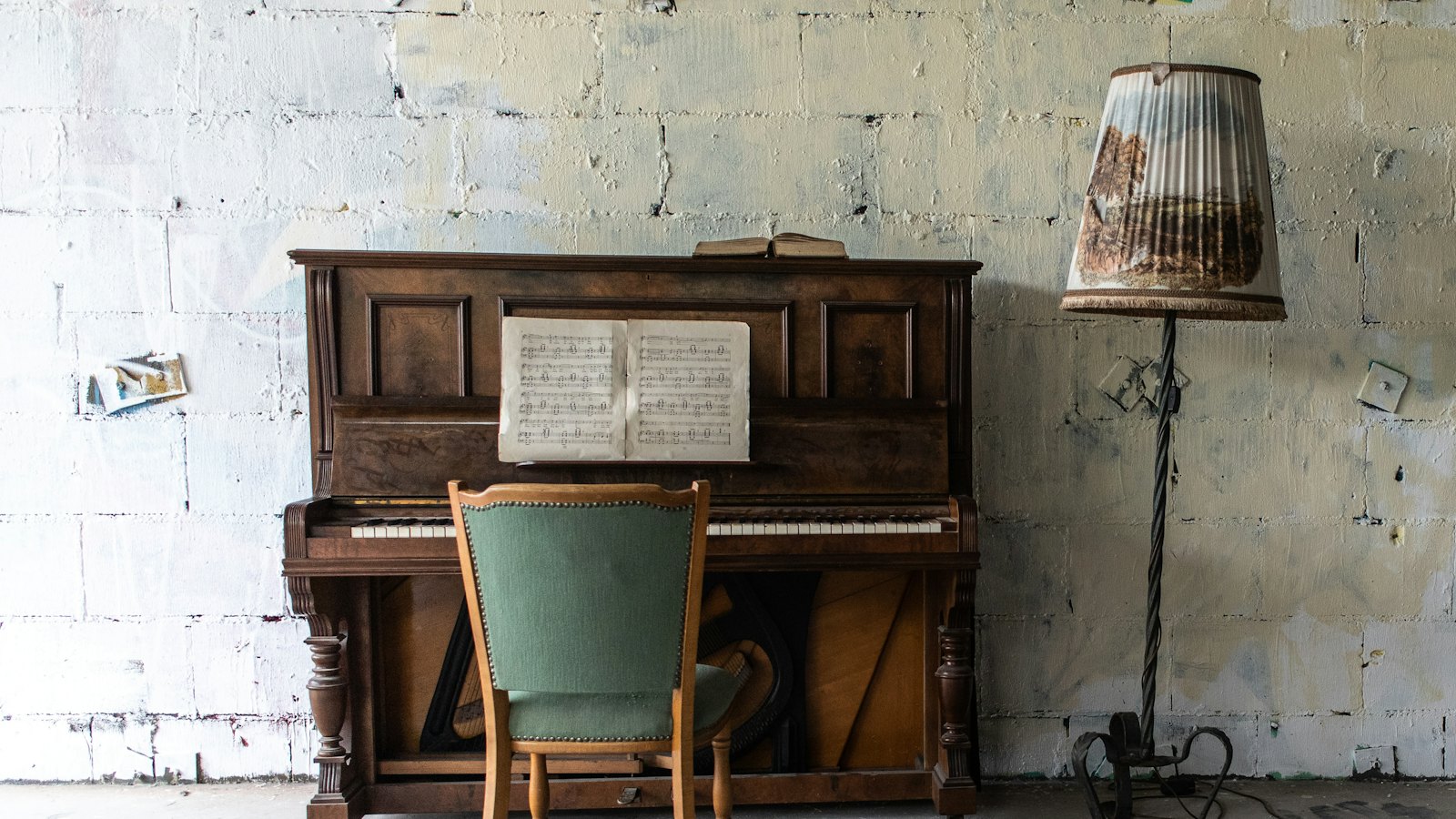
An upright carries its soundboard at its back, so the wall it stands against does more for your neighbours than anything else you decide. Keep it off a wall you share, and off the wall behind their bedroom. An internal wall, a rug beneath the piano and curtains or soft furnishings in the room all take energy out of what travels; bare boards and bare plaster send it on. In a townhouse, a ground floor position beats an upstairs one, because an upstairs floor is also a ceiling.
One thing that matters more to the piano than to the neighbours: a flat with ducted heating runs dry in winter, and dryness moves tuning and timber. Our article on what humidity a piano needs in Australia covers that, and tuning and servicing explains the maintenance side.
Does a muffler pedal make a piano quiet enough?
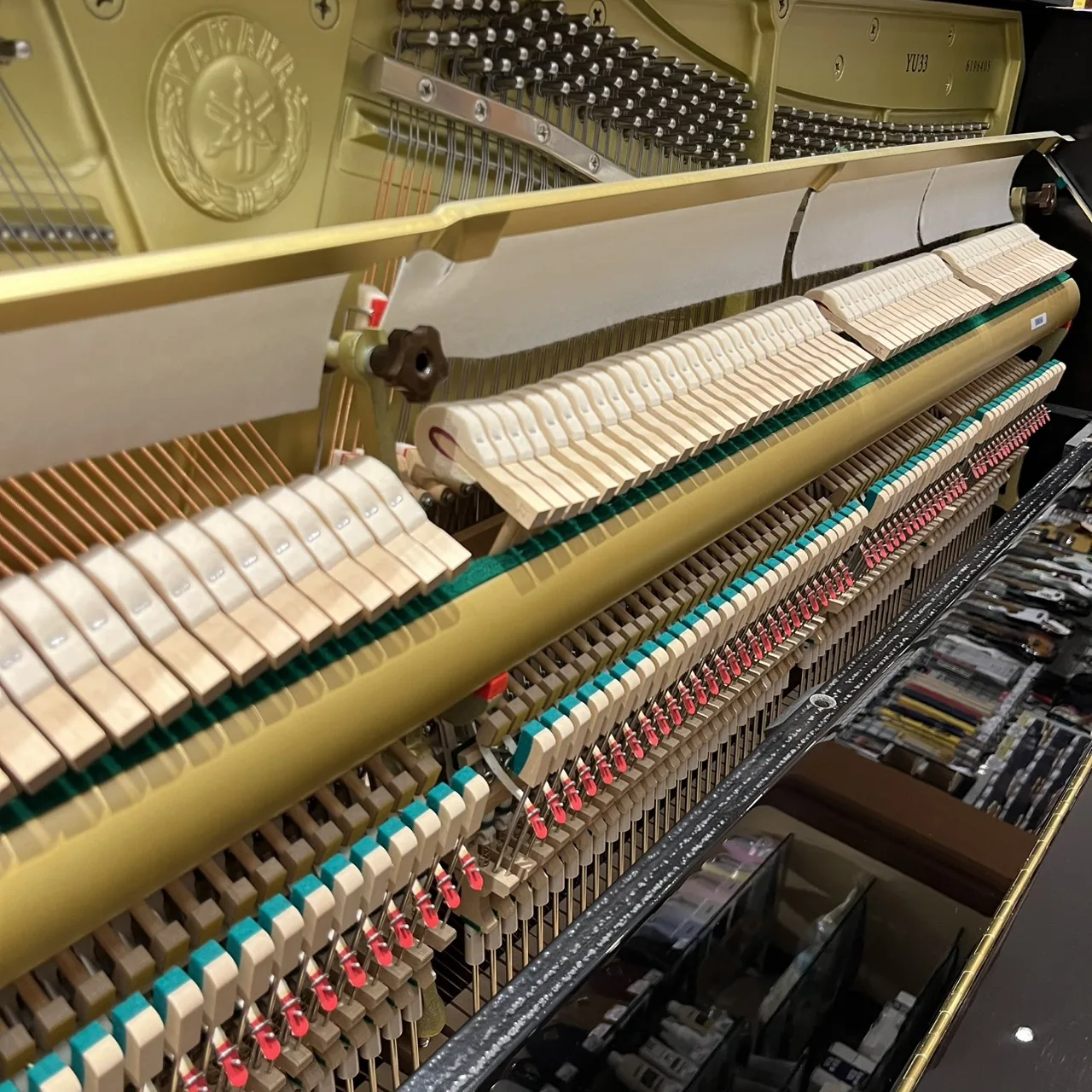
Many Japanese uprights have a muffler function, often sold as a practice pedal, that softens the tone. How a particular model achieves it varies between designs, so check the manual for your model rather than assuming. What is consistent is the limit: it lowers the volume, it does not make the piano silent, and it alters both touch and tone. That makes it genuinely useful for scales and repertoire drilling late in the evening, and less useful when you want to play a piece properly.
Is a silent piano the answer for an apartment?
It can be, and it is the one option that removes the string sound altogether. In a silent system a mute rail stops the hammers just before they reach the strings, while sensors under the keys feed a sound module you listen to through headphones, as Pianist Magazine describes. With the rail disengaged the piano is an ordinary acoustic piano again.
Two questions to ask about any piano offered as silent. First, whether the system was fitted at the factory, as Yamaha and Kawai do on their silent ranges, or retrofitted afterwards by an aftermarket maker such as Adsilent, PianoDisc Quiet Time, Genio, Kioshi or Gabor. Both exist on pre-loved instruments and the answer changes who can service it. Second, whether the hammer action was properly adjusted to allow for the mute rail, which that article notes is part of the work. And silent is a trade name, not a measurement: the same article observes you can still hear the keys against the key bed, so expect a soft mechanical tapping in the room even when the strings are stopped.
Which pre-loved Japanese upright suits an apartment?
A compact upright, standing against an internal wall, with a muffler function or a silent system if you practise late at night. Height and case depth decide whether it fits the room at all; after that the question is tone, and tone is personal. If you are weighing an upright against a small grand for a townhouse, our comparison of uprights and grands works through the trade-offs, and the instruments page is the place to look at what we bring in.
A question about noise is settled by ears rather than by reading. Come and hear a piano in a room, with the muffler on and off, and through headphones if a silent system is fitted. The showroom is at 63 Blackburn Road, Mount Waverley, and the phone is 0479 128 955. Book a visit and bring the piece you are practising.
Questions people ask
Can I have a piano in an apartment in Victoria?
Yes. An acoustic piano in a flat or townhouse is lawful in Victoria, and what is regulated is when you play rather than whether you own one. Your owners corporation can add its own rules on top of the state hours, so read them before you buy.
What hours can I play a piano under EPA Victoria rules?
In October 2026, EPA Victoria listed musical instruments as playable 7 am to 10 pm Monday to Thursday, 7 am to 11 pm Friday, 9 am to 11 pm Saturday and public holidays, and 9 am to 10 pm Sunday. Noise can still be assessed as unreasonable inside those hours if the volume is unnecessarily excessive.
How can I make an acoustic piano quieter?
Move it off any wall you share with a neighbour, because an upright radiates from its back, and put a rug underneath it. A muffler or practice function softens the tone further, and a silent system stops the hammers reaching the strings so you hear the piano through headphones instead.
Do owners corporation rules apply to a piano?
They do. Consumer Affairs Victoria lists noise from musical instruments among the subjects an owners corporation can make rules about, and where it has made no rule on a matter the model rules cover, the model rule applies instead.
Does a silent piano make no sound at all?
No. The strings are stopped, so nothing carries through the wall the way a played piano does, but the keys and action still make a soft mechanical sound in the room. Ask whether the system was fitted at the factory or retrofitted later, because that changes who can service it.