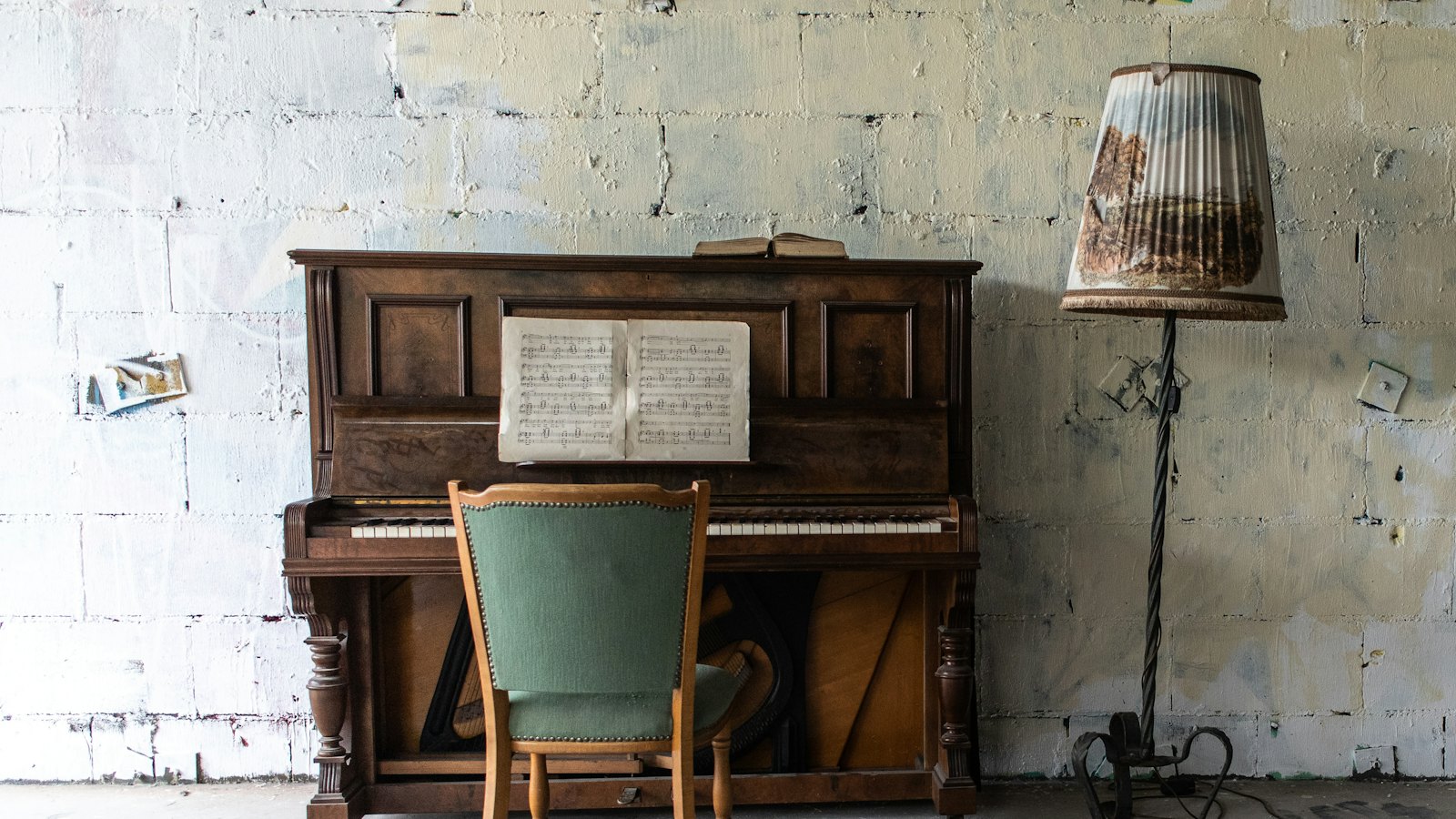
Upright vs grand piano: which fits your home?
A grand needs two and a half times the floor depth of an upright, and under about 152 cm it has the shorter bass strings. How to choose by room, sound and access.
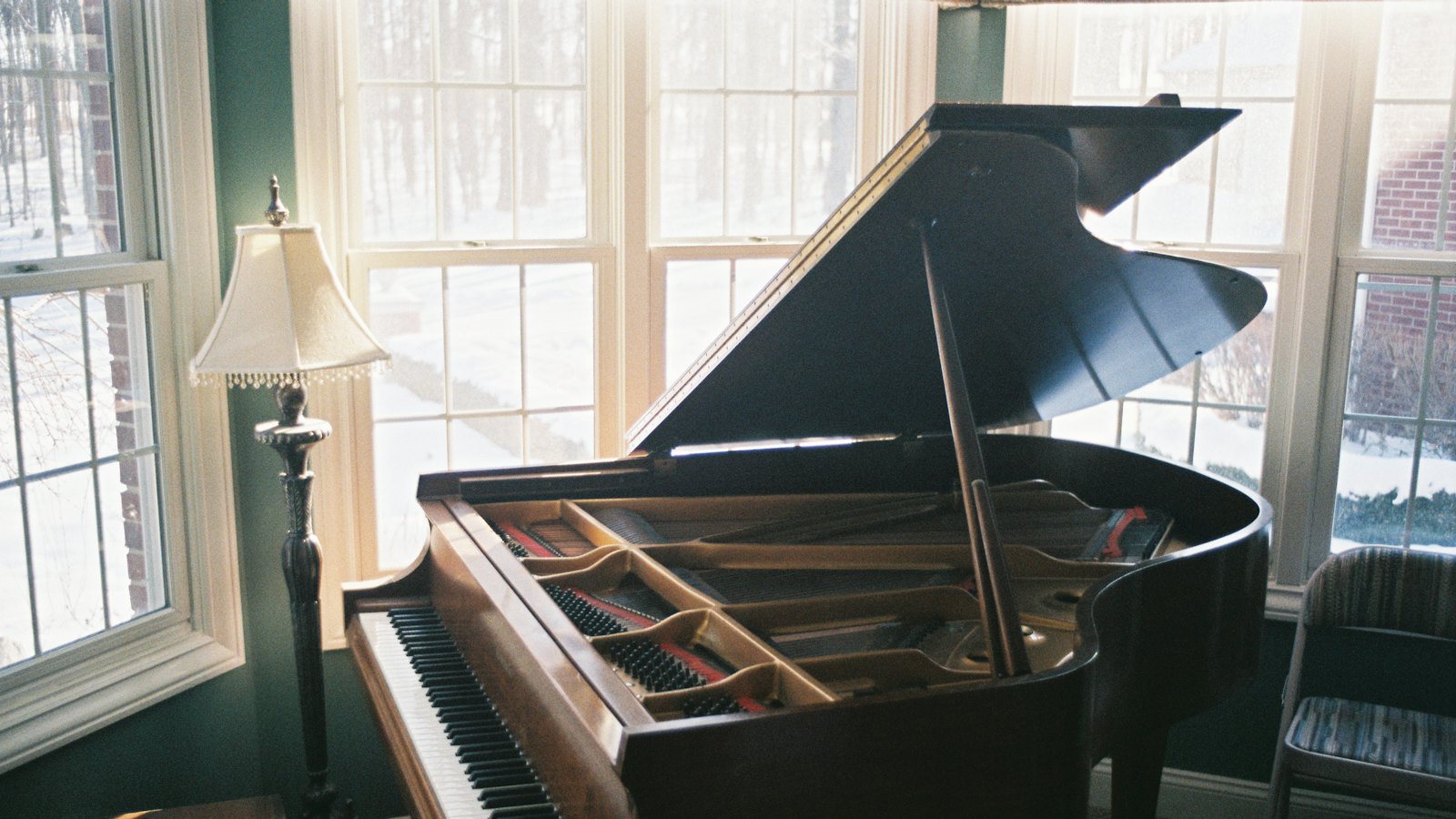
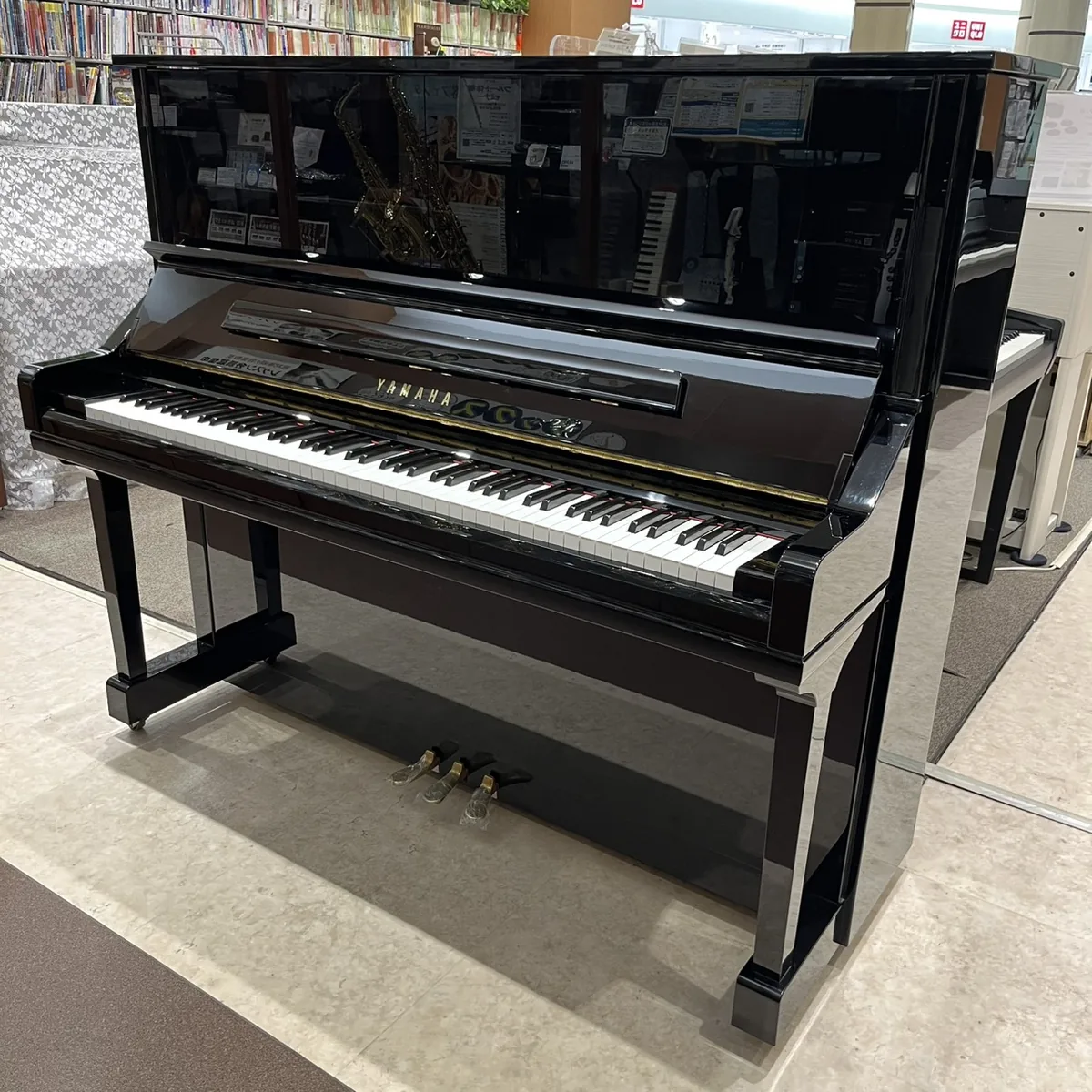
In the upright vs grand piano choice, most Australian homes are better served by a tall upright. A 130 cm upright needs about 1.5 metres of wall and 62 centimetres of floor depth. A 153 cm baby grand needs roughly 1.5 by 2.5 metres of open floor, and only a longer grand repays that space in sound.
I choose each piano in Japan myself, or through partners who know what I look for, and every one is photographed there before import and checked in our Melbourne workshop. That shapes this question. The pre-loved Japanese market is largely tall uprights in the 121 cm to 131 cm range, so for a piano chosen in Japan the real comparison is usually a tall upright against a small grand, rather than grand against upright in the abstract.
Is a grand piano better than an upright?
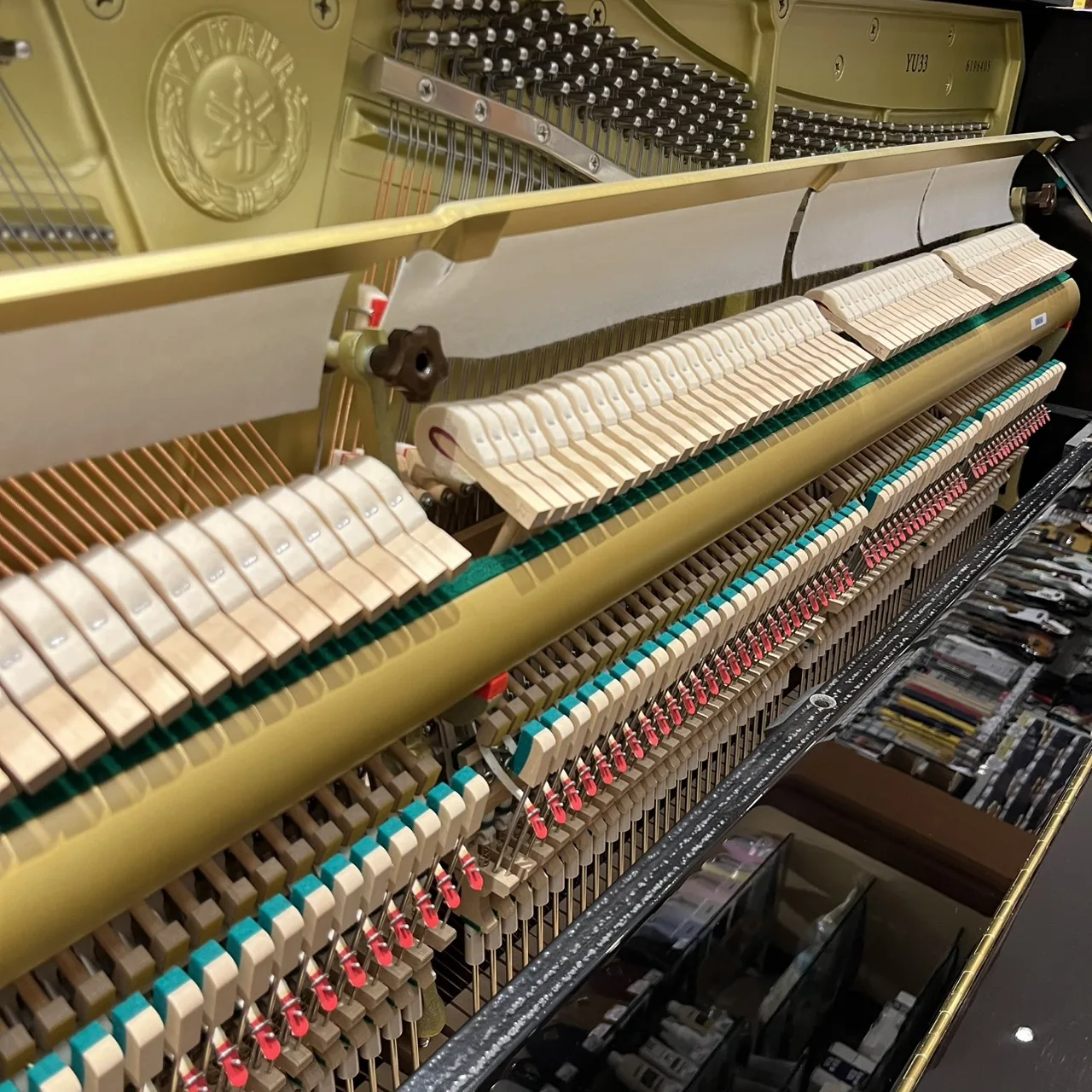
Not by shape alone. Two things separate them. The first is the action, the mechanism between key and string. In a grand the hammers sit below the strings and fall back under their own weight, so the note is ready to repeat sooner and the key gives finer control near the bottom of its travel. In an upright the hammers strike sideways and springs return them, which makes fast repeated notes harder to control.
The second is string length and soundboard area, and this is where shape misleads people. Length does the work, not the silhouette. The UK dealer Mark Goodwin Pianos puts it plainly in its baby grand versus upright guide: a Yamaha U3 has longer bass strings than a baby grand under 5 ft, about 152 cm, and it suggests about 5 ft 7 in, or 170 cm, as the length at which a grand pulls clearly ahead of a good upright.
How much room does a baby grand need?
Start from the maker's measurements rather than a rule of thumb. Kawai publishes metric specifications for its current range, and pre-loved Japanese uprights and grands sit in the same dimensions, so these four models make the comparison concrete. The figures below are from Kawai's own product pages for the K-300, K-500, GL-10 and GL-30, read in October 2026.
| Model | Type | Width | Depth into the room | Weight |
|---|---|---|---|---|
| Kawai K-300 | Upright, 122 cm tall | 149 cm | 61 cm | 227 kg |
| Kawai K-500 | Upright, 130 cm tall | 150 cm | 62 cm | 238 kg |
| Kawai GL-10 | Grand, 153 cm long | 150 cm | 153 cm | 282 kg |
| Kawai GL-30 | Grand, 166 cm long | 150 cm | 166 cm | 312 kg |
Every one of them is about 150 cm wide, because that is the width of 88 keys and the case around them. The difference is depth. An upright reaches 61 centimetres into the room and the rest of it goes up the wall. A GL-10 reaches 153 centimetres in, two and a half times as far, and it needs a further metre or so for the bench and the player. Millers Music, a Cambridge dealer, writes in its guide to room size that a 2 metre by 2 metre room is just about large enough for a grand provided no other large furniture is in it. That is a true minimum and not a comfortable one. In a typical Mount Waverley lounge room, plan on about 1.5 metres by 2.5 metres of floor given over to the instrument, with the straight side near a wall and the lid opening into the room rather than towards it.
For an upright, the harder constraint is usually not floor space but which wall. An internal wall away from a window, a heating vent and a reverse-cycle head is worth more to the piano than another 20 centimetres of room.
Is a small grand better than a tall upright?
If the choice is between a 130 cm upright and a grand shorter than about 152 cm, the upright is the stronger instrument for the money in most homes. Its bass strings are longer, its soundboard is working, and the maker has spent the budget on the parts that make the note. A short grand spends a good deal of it on the case, because the case is the reason people want one. Mark Goodwin Pianos reaches the same conclusion and recommends about 130 cm of upright over a grand under 5 ft.
This is the point the overseas comparison articles skip. They answer whether grands are better than uprights in general, which nobody is actually choosing between, instead of the choice in front of you: a particular 131 cm upright in front of you today against a particular 153 cm grand. Judge those two by length, condition and touch, not by category. Our guide to what the Yamaha model codes mean covers how to read the model and year of a tall upright.
Can a grand go in an upstairs room?
Usually, yes, and the deciding factor is access rather than mass. A GL-10 at 282 kg is only about 55 kg heavier than a K-300 upright at 227 kg. The difference is how each one travels. An upright goes up a staircase in one piece on its back, which needs a stairwell wide enough to turn 150 centimetres of case. A grand comes apart first, with the lid, the music desk, the pedal lyre and the legs off and the body carried on its straight side on a skid, so a tight turn can actually suit it better.
Either way the honest answer comes from someone looking at the stairwell, the landing and the doorways before anything is bought. That is part of our white-glove delivery, and it is a conversation worth having before you choose the instrument, not after.
Which one suits your room?
- A room where the piano gets less than about 2.5 metres of clear depth: a tall upright, 121 cm to 131 cm.
- A room with 2.5 metres of depth, a wall for the straight side and a budget that reaches 170 centimetres of grand: a grand is worth the floor.
- The same room but a budget that reaches only a 150 cm grand: the tall upright has the longer bass strings, and you keep the floor.
- A family starting lessons, with practice as the point: a 121 cm to 131 cm upright, chosen for touch and condition.
- A player working on advanced repertoire with grade exams ahead: the grand action earns its space.
Both shapes are in what we bring in, pre-loved, or second-hand as most people search it, chosen in Japan and checked here. You can see the uprights and grands we import on our instruments page, though the only way to settle this question is to sit at both. Come and play a tall upright and a grand side by side in Mount Waverley and bring the measurements of your room. Book a viewing and we will put a tape measure on the floor with you.
Questions people ask
Is a grand piano better than an upright?
Not automatically. A grand's action repeats faster and a long grand has a rounder bass, but length does the work rather than shape: Mark Goodwin Pianos notes that a Yamaha U3 has longer bass strings than a baby grand under 5 ft, about 152 cm.
How much room does a baby grand need?
A Kawai GL-10 is 150 cm wide and 153 cm long, so allow about 1.5 metres by 2.5 metres once the bench and the player are counted. Millers Music calls a 2 metre by 2 metre room just about large enough, which leaves nothing over for furniture.
Is a small grand better than a tall upright?
Below about 152 cm of grand, a 130 cm upright is usually the stronger instrument for the money, because its bass strings are longer and the budget went into the parts that make the note. Above about 170 cm the grand pulls ahead.
Can a grand go in an upstairs room?
Often it can, and access matters more than weight. A Kawai GL-10 at 282 kg is only about 55 kg heavier than a K-300 upright, and a grand comes apart for the stairs while an upright goes up in one piece, so a tight turn can suit the grand better.