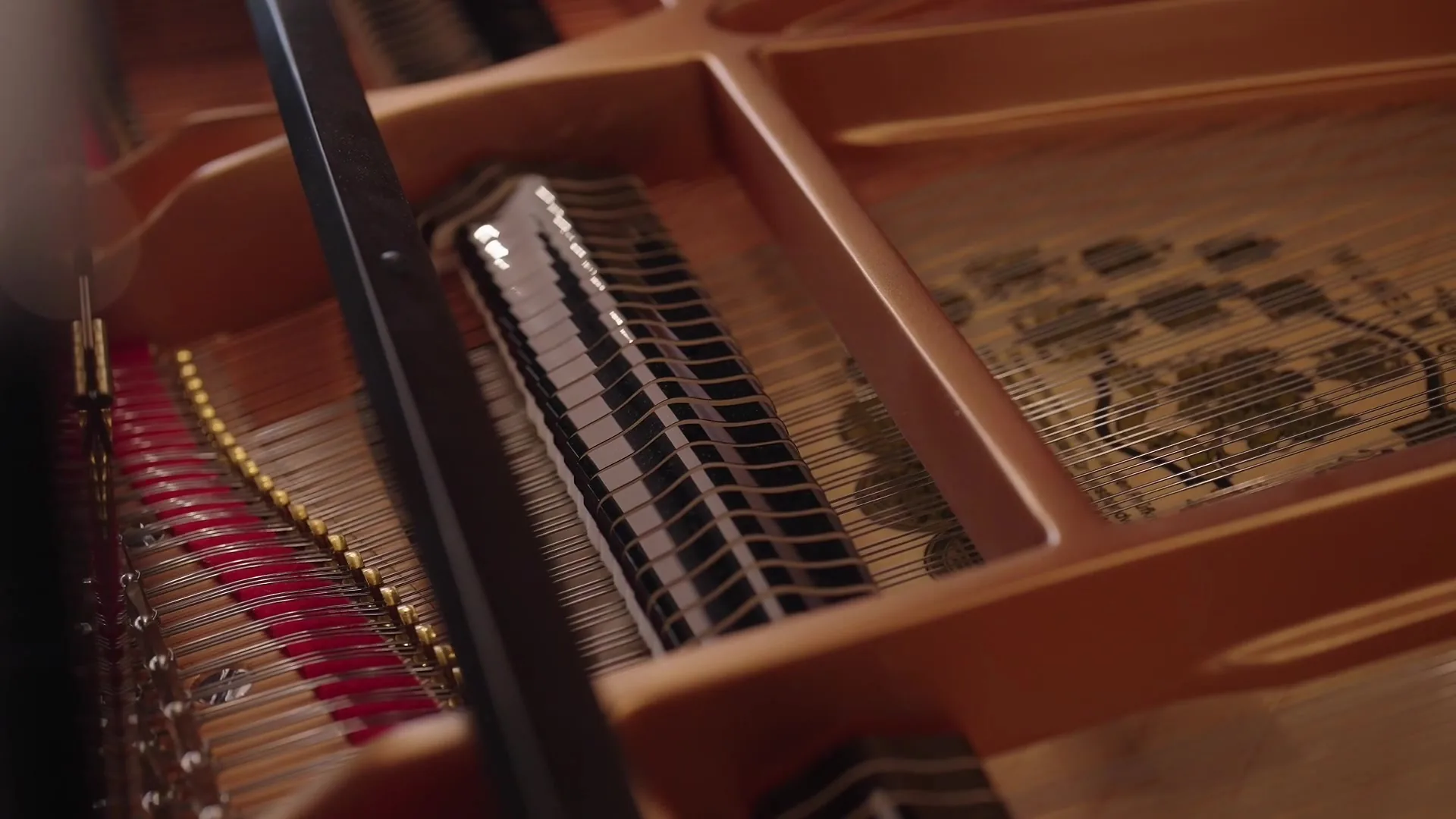
What humidity does a piano need in Australia?
Pianos want 40 to 60 per cent relative humidity, held steady. Through a Melbourne winter the dry air comes from the heating rather than the weather, and this is what to do about it.
Most piano makers ask for a relative humidity of about 40 to 60 per cent, held steady. In Australia the steadiness matters more than the number: a Melbourne lounge room with the ducted heating running through July is drier than the weather outside suggests, and it is that indoor dryness, not the local climate, that moves a piano.
I choose our pre-loved pianos in Japan, photograph them there and have every one checked in our Mount Waverley workshop before it reaches the showroom, so the question of whether an instrument built for a Japanese home settles into an Australian one is one I take seriously. The honest answer is that every piano, wherever it was built, responds to the air around it. If you want the import side of that argument, it is in our guide to grey market Yamaha pianos. This article is about the room.
What humidity level is right for a piano?
C. Bechstein puts it plainly: "A humidity level of 40 to 60 percent is good; fluctuations should be kept to a minimum". The two halves of that sentence are not equal in weight. A piano that sits at 45 per cent all year is in better shape than one swinging between 35 and 60 per cent every few months, because it is the movement of the wood, not any single reading, that unsettles tuning and touch.
Kawai makes the same point about where the instrument lives. A piano's spot should have "a stable temperature and avoid large changes in humidity and exposure to wind flowing in from outside", because those conditions "create movement in the piano, resulting in unstable tuning". An inexpensive hygrometer on the wall beside the piano will tell you more about your instrument's life than any climate table.
Is ducted heating bad for a piano?
Not in itself. What heating does is lower the relative humidity of the air it warms. The National Asthma Council Australia, writing about indoor air rather than pianos, says that "most forms of heating will lower relative humidity, but in some cases may cause air to become too dry", and recommends keeping indoor relative humidity between 30 and 50 per cent for health, advice current in September 2026.
Read that range beside the piano's 40 to 60 per cent and the problem shows itself. A home heated to a comfortable winter setting can sit at the bottom of what a piano wants, or under it. That is the real climate issue in this country, and it applies to a piano built in Japan, in Indonesia or in Europe.
Three practical things follow. Keep the piano clear of the heating outlet, not just out of the draught but out of the warm dry column that rises from a floor vent. Hold the thermostat at a steady setting instead of heating hard in the evening and letting the room go cold overnight. And if the hygrometer reads in the low thirties for weeks at a time, ask your tuner about a room humidifier or an under-piano humidity system before you buy anything.
How dry is a Melbourne year, really?
Here is the comparison people make, with the caveat that matters. Tokyo's figures are Japan Meteorological Agency normals for 1991 to 2020, monthly averages built from daily means. Melbourne Airport's are afternoon readings taken at 3 pm, averaged over the same thirty years. They are not the same measurement, so the gap between the columns looks wider than the difference in climate really is.
| Period | Tokyo, mean relative humidity | Melbourne Airport, 3 pm relative humidity |
|---|---|---|
| January | 51 per cent | 44 per cent |
| June | 75 per cent | 65 per cent |
| Whole year | 65 per cent | 52 per cent |
Sources: Japan Meteorological Agency normals for Tokyo, and Bureau of Meteorology averages for Melbourne Airport as tabulated in Climate of Melbourne, both read in September 2026.
Read the June row twice. Melbourne's winter afternoons are the dampest part of our year outdoors, and that is exactly when the heating is running indoors and the room is at its driest. Outdoor humidity is not what a piano lives in.
Why do piano keys stick?
Usually because something has swollen. Bechstein describes the mechanism: "A high level of humidity will impair the tuning of your piano and cause swelling in the felt, leather and wooden parts of the action assembly, which will also impair the touch". A key that goes down and stays there, or returns slowly, is often a bushing or a guide pin with no clearance left, which happens in a damp room or a closed-up holiday house rather than a heated one.
Dry air shows itself differently, as tuning that will not hold and an action that feels uneven from one note to the next. Either way it is work for a technician rather than for oil or force, and it is the sort of thing sorted out in a normal visit. It is one reason the first tuning is included, three to four weeks after delivery, once the piano has settled into your room.
Where should a piano go in the house?
Kawai is specific about this. A piano "should never be placed on a western wall, which will be heated daily by the afternoon sun", and "should also not be left directly under an open window or in any breeze way". Put that together with what heating does and the shortlist for an Australian home is short: an internal wall, out of direct sun, clear of the heating and cooling outlets, and away from the door that gets thrown open on a hot northerly day.
Leave a few centimetres between the back of an upright and the wall so air can move. Expect an upstairs room to run hotter and drier than a downstairs one. If the only wall that fits is the one with a vent beneath it, a deflector on the vent costs very little and changes where that warm air goes.
How often should a piano be tuned here?
Kawai says the interval depends "on many factors, especially the stability of the temperature and humidity and the amount of use the piano receives". In Melbourne the two moments worth booking are after the heating goes off in spring and after the first long run of hot days, because both are points where the room has changed and the piano has followed it. A piano tuned on that rhythm holds closer to pitch than one tuned on the same calendar date each year. Our tuning and servicing page sets out what a visit covers.
None of this makes a piano fragile. It makes it a wooden instrument living in a house with a heater, which is what every piano in this country is. If you would like to see how the pianos we bring in from Japan are prepared, and talk through where one could sit in your own room, book a visit to the Mount Waverley showroom and bring the measurements of the wall you have in mind.
Questions people ask
What humidity level is right for a piano?
About 40 to 60 per cent relative humidity, held as steady as you can manage, is the range C. Bechstein publishes. A steady 45 per cent is kinder to a piano than a room that swings between 35 and 60 per cent through the year.
Why do piano keys stick?
Most often because damp has swollen the felt, leather or wooden parts of the action and left a key with no clearance. It is a technician's job, and usually a small one. Very dry air shows itself differently, as tuning that will not hold.
Is ducted heating bad for a piano?
Ducted heating is not harmful in itself, but warming air lowers its relative humidity, so a heated room in July can be drier than a piano wants. Keep the piano clear of the outlet, hold the thermostat steady and watch a hygrometer.
Where should a piano go in the house?
On an internal wall, out of direct sun, clear of heating and cooling outlets and not under an open window. Kawai advises against a western wall, which the afternoon sun heats daily.