Reconditioned piano meaning, and what to ask a seller
Reconditioned, refurbished and restored are used interchangeably in the piano trade, and only two of them have a definition from an industry body. Here is what each label covers and the questions that settle it.
The meaning of a reconditioned piano is narrower than most buyers assume. The Piano Technicians Guild defines reconditioning as putting a piano back in good condition by cleaning, repairing and adjusting it, without replacing major components such as the soundboard, bridges, pinblock and most action parts. Restored and rebuilt mean more work.
I choose each piano in Japan, either myself or through partners who know what I look for, photograph it there, import it direct and have it checked in our Mount Waverley workshop before it is offered for sale. The labels matter because a pre-loved piano, or second-hand as most people search it, can carry any of these four words with almost nothing in common behind them.
What does reconditioned mean for a piano?
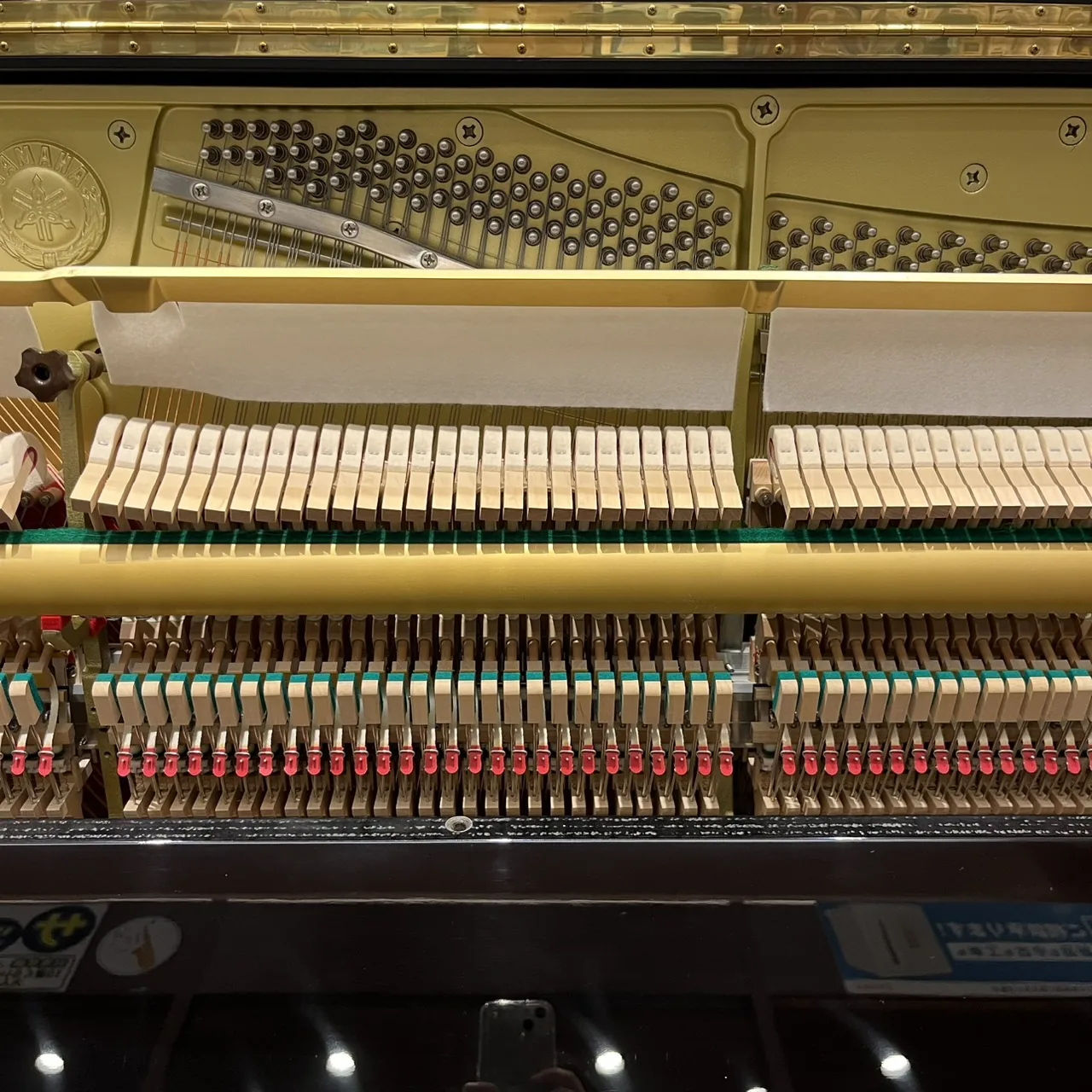
Reconditioning keeps the original parts and brings them back into service. The piano is cleaned, the action is freed up and adjusted, hammers are reshaped and fitted to the strings, loose parts are tightened, and only the worn items that have to be replaced are replaced. The Piano Technicians Guild is explicit that this leaves the soundboard, bridges, pinblock and most action parts alone, so an older piano's performance and lifespan are not returned to new.
That is the honest version. At the other end, a Cambridge dealer's buying guide notes that reconditioned can mean anything from a full reconditioning down to shaving the hammer felts a tiny bit (article dated 7 January 2022). The same guide points out that manufacturer reconditioned does not mean the maker did the work.
Reconditioned, refurbished, restored or rebuilt?
Only two of these four have a definition from an industry body. The Guild's own page says the work is variously described as rebuilding, restoration or reconditioning, which is a polite way of saying the trade uses the words interchangeably.
| Label | What it usually means | What it usually leaves alone |
|---|---|---|
| Reconditioned | Defined by the Piano Technicians Guild: cleaned, repaired and adjusted, worn parts replaced only where necessary | Soundboard, bridges, pinblock, most action parts |
| Refurbished | No agreed definition. In dealer listings it ranges from a careful overhaul of felts, hammers and finish down to a clean and a polish | Anything the seller does not list |
| Restored | No agreed definition. Often used for the same work as reconditioning, sometimes for the same work as rebuilding | Anything the seller does not list |
| Rebuilt | Defined by the Guild: complete disassembly and inspection, all worn or deteriorated parts replaced, reassembled to new tolerances | Little, which is why it costs what it does |
So the label tells you almost nothing. The list of work behind it tells you everything.
What is regulation, and why is it the part that gets skipped?
Regulation is the adjustment of the moving parts between each key and its hammer, so that all 88 notes respond the same way and at the same depth. It is not tuning. Tuning sets the pitch of the strings and holds for months. Regulation sets how the piano feels under the hand and holds for years, and it is slow, quiet work that does not show in a photograph.
That is exactly why it gets left out. A technician at Flow Piano in Box Hill writes that even well-regarded dealers do not attend to regulation and voicing on pre-loved instruments, because buyers judge the outside, and that the basic key depth is often wrong on the pianos he sees:
If the key depth is wrong, 90% the rest of the regulations are all wrong. (Flow Piano, 12 December 2023)
His advice is to ask your tuner to regulate the piano as well as tune it. That is a fair test of any seller too: a piano that has been properly prepared will have level keys, even key depth and a consistent response from the bass to the treble. One that has only been polished will not, however good it looks. Our tuning and servicing page explains what regulation involves alongside ordinary tuning.
Are refurbished pianos good?
A refurbished piano is as good as the work done to it, and no better. The strongest dealer descriptions, mostly European, read like a real overhaul: the instrument is largely disassembled, defective parts replaced, action felts and leathers renewed, tuning pins and pinblock checked, hammers reshaped and voiced, then regulated and tuned before delivery. Some listings say only that the piano was professionally refurbished and will be tuned before delivery, which is not the same claim at all.
For a well-built Japanese upright, a Yamaha U3H from the 1970s or a Kawai of the same era, careful reconditioning is usually the right level of work, because the structure is sound and it is the felts, the action adjustment and the finish that have aged. If you are comparing model codes and years, our guide to what the U3H and U3M codes mean goes through that.
What should I ask about the work done on a piano?
Ask for it in writing, item by item. The Cambridge guide suggests asking what work was done, when it was done and whether there is a full service history. I would add these:
- Which parts were replaced, and which were cleaned or adjusted and kept?
- Was the action regulated, by whom, and when?
- Were the hammers reshaped or renewed, and were they voiced afterwards?
- Has the pitch been raised to concert pitch, and how long has it held?
- Are the keys level, do they all return, and does any note buzz?
Consumer guarantees apply automatically to pre-loved products bought from a business in Australia, not only to new ones, and they sit alongside anything the seller offers in writing. Consumer Affairs Victoria lists them, as checked in October 2026. What is reasonable for a forty-year-old instrument is not what is reasonable for a new one, which is why the record of the work still matters. What our own cover does and does not include is set out in what a pre-loved piano warranty actually covers, and the rest of the pre-purchase checks are in our Melbourne buying checklist.
Ask me the same questions you would ask any other seller, and play the piano before you decide. Book a viewing at the Mount Waverley showroom, bring a piece you know well, and listen for whether every note answers the same way.
Questions people ask
What does reconditioned mean for a piano?
The Piano Technicians Guild defines reconditioning as putting a piano back in good condition by cleaning, repairing and adjusting it, replacing worn parts only where necessary. It leaves the soundboard, bridges, pinblock and most action parts in place, so the piano is not returned to new.
Are refurbished pianos good?
A refurbished piano is as good as the work behind the word, which is not defined anywhere. Ask for the list of what was replaced, adjusted and regulated, and judge that list rather than the label.
What is regulation on a piano?
Regulation is the adjustment of the moving parts between each key and its hammer so that all 88 notes respond evenly and at the same depth. It is separate from tuning, which sets the pitch of the strings.
What should I ask about the work done on a piano?
Ask what was replaced, what was cleaned and kept, whether the action was regulated and by whom, and whether there is a service history in writing. Then check that the keys are level and return properly and that no note buzzes.
What is the difference between reconditioned and rebuilt?
Reconditioning keeps the major components and renews what has worn. Rebuilding means complete disassembly, inspection and replacement of worn parts, reassembled to close to new tolerances, which is why it costs far more.