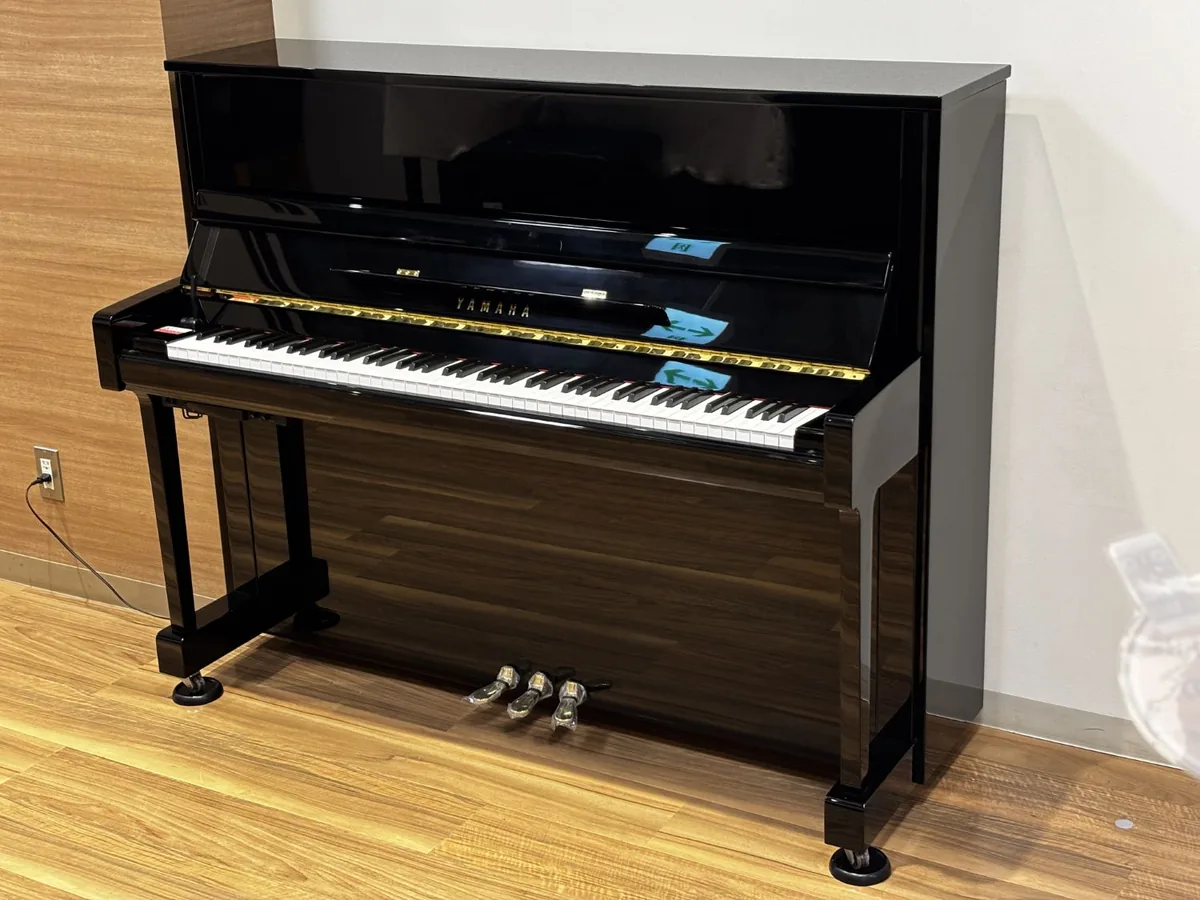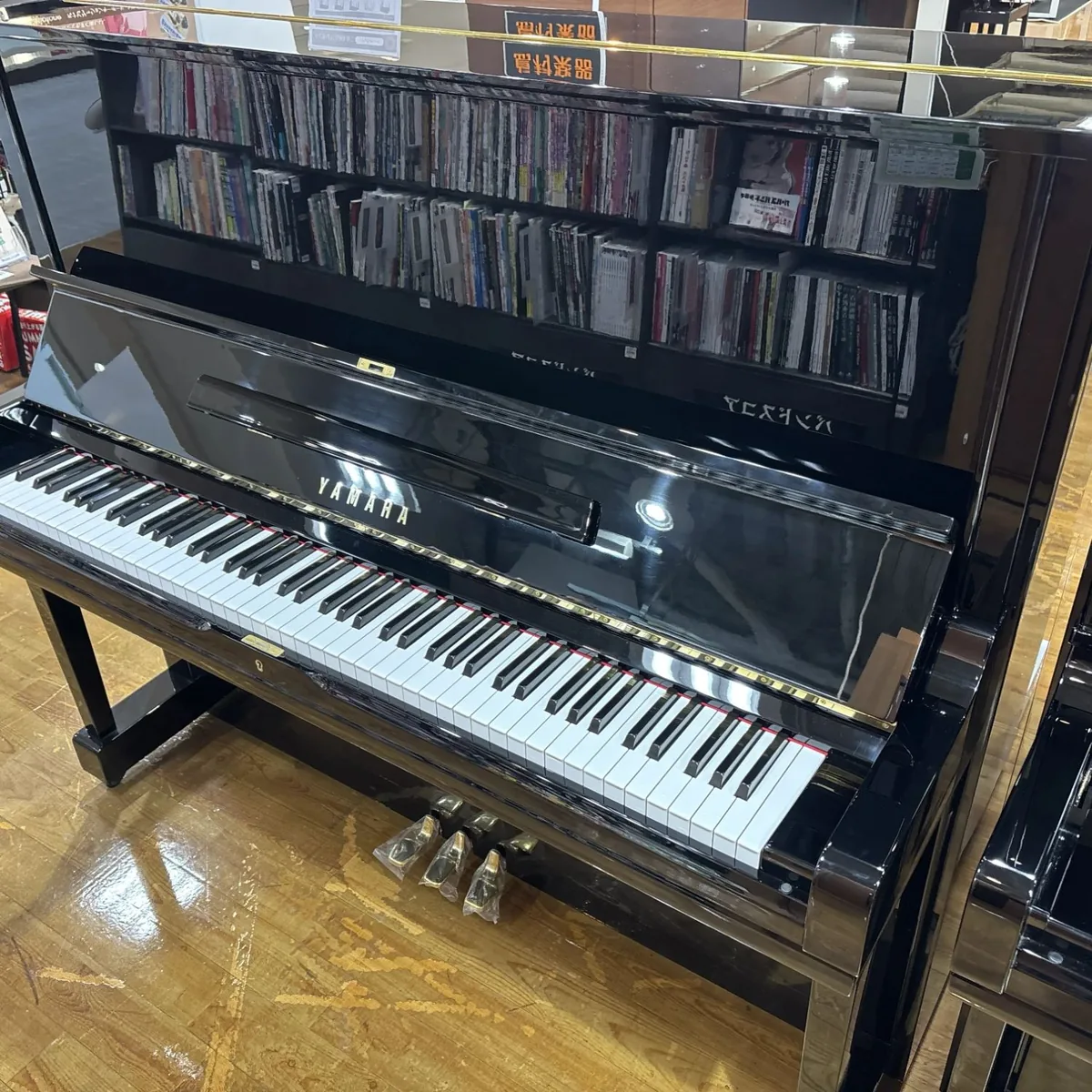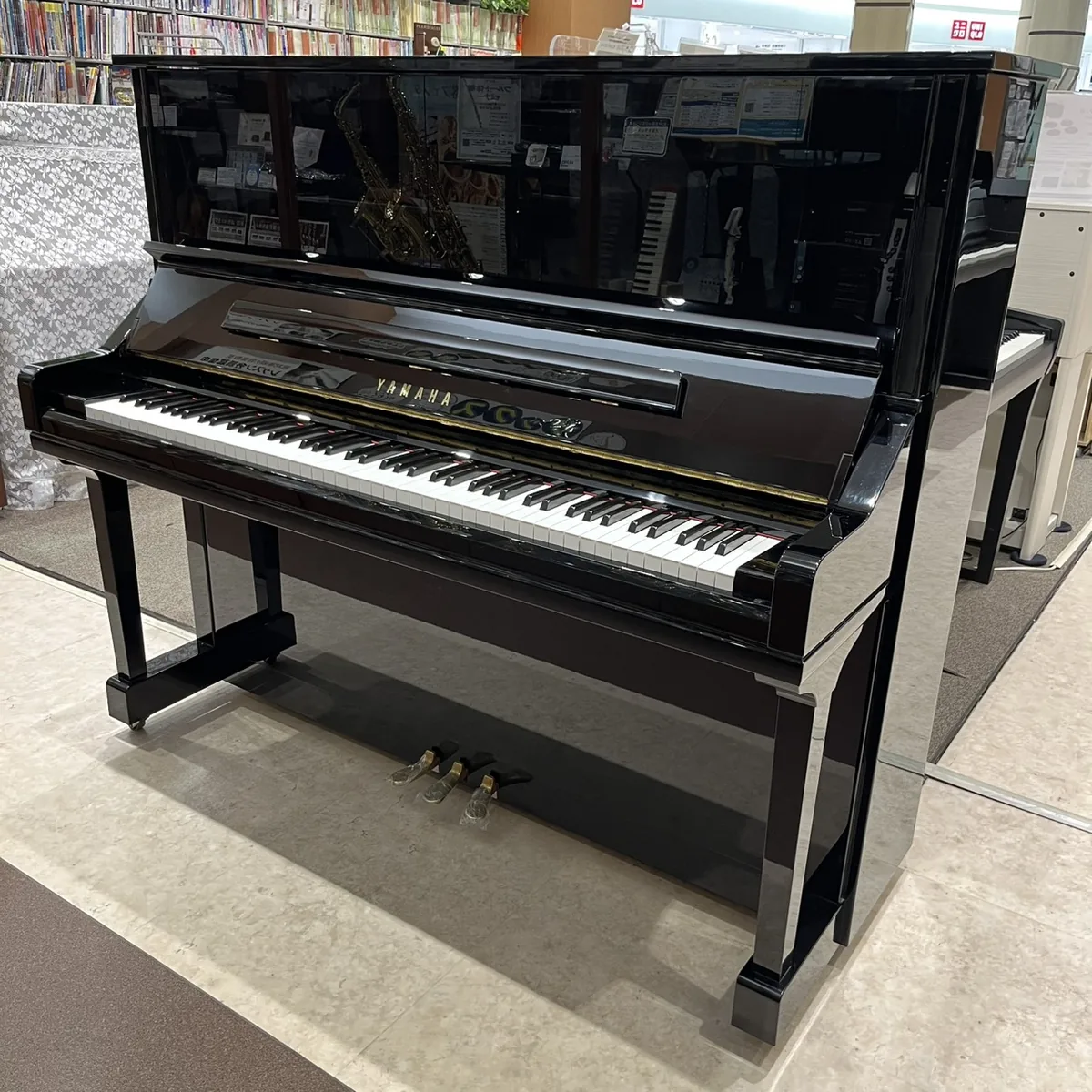
Kawai vs Yamaha upright piano: which to buy?
An honest comparison of pre-loved Japanese Kawai and Yamaha uprights: how the model codes line up, what the two actions do differently, and what support an imported piano has in Australia.

On a pre-loved Japanese instrument, the Kawai vs Yamaha upright piano question comes down to two things: the tone you prefer, and the condition of the particular piano in front of you. Yamaha is usually described as brighter and more direct, Kawai as warmer and rounder. Neither brand is the safer buy on its own.
I choose each piano in Japan, either myself or through partners who know what I look for, and both makers come from the same market. A pre-loved Kawai and a pre-loved Yamaha of the same age, or second-hand as most people search it, have lived the same Japanese life: the same lesson rooms, the same climate, often the same kind of workload. Every piano is photographed in Japan before import and checked in our Melbourne workshop, and that workshop report tells you more than the name on the fallboard.
Is Kawai as good as Yamaha?
Yes, in the sense that matters: both are built to a consistent Japanese standard, and a well-kept example of either will outplay a tired example of the other. The differences people describe are of voice and touch, not of grade. A UK seller that specialises in reconditioned Japanese uprights calls the Yamaha clear, bright and precise and the Kawai warmer and rounder, and adds that neither is better, they are just different voices (Mark Goodwin Pianos, read in October 2026). Almost every tone comparison online is written by someone selling one of the two, including this one, which is why we would rather you played them side by side.
One real difference is the action, the mechanism between the key and the string. Kawai's current uprights use what it calls the Millennium III action, whose parts are made of ABS-Carbon, described by Kawai as a composite "created by the infusion of carbon fiber into our renowned ABS Styran" (Kawai K-300 specifications, October 2026). Yamaha's uprights in the same class use a traditional wooden action. Composite parts do not swell and shrink with the air the way wood does, which is a point in Kawai's favour in a dry or variable room, though it does not make any piano immune to the climate.
How do the Yamaha U3 and Kawai K500 compare?
They are the tall professional uprights of each range, and they line up closely on paper. Taller cabinets hold longer strings and a larger soundboard, which is where the deeper bass comes from.
| Model | Height | Action | How sellers describe the tone |
|---|---|---|---|
| Kawai K-300 | 122 cm (Kawai) | Millennium III composite | Warmer, rounder |
| Yamaha U1 | About 121 cm (dealer figure) | Traditional wood | Brighter, more precise |
| Kawai K-500 | 130 cm (Kawai) | Millennium III composite | Warmer, fuller |
| Yamaha U3 | About 131 cm (dealer figure) | Traditional wood | Brighter, more powerful |
The catch is that these four model names belong to showrooms selling new pianos. A pre-loved Kawai arriving from Japan rarely says K-300 on it.
Are pre-loved Kawais imported from Japan too?
They are, and they carry older model codes that confuse buyers who have read only the new-model comparisons. Kawai's Japanese uprights from the 1970s and 1980s run in series such as BL, KS, CL and the tall US line, which is the family the Yamaha U-series is usually matched against. A seller who reconditions them describes the BL series as Kawai's mainstream upright through the 1970s and into the 1980s and the KS series as its 1980s range sitting a step above the everyday models, and admits that heights varied across both (BL series, KS series, October 2026). Because no published chart settles it, the only reliable comparison is physical: measure the cabinet. A Kawai around 121 cm sits where a Yamaha U1 sits, and one around 131 cm sits where a U3 sits, whatever the letters say.
Read the model code and the serial number off the iron plate while you are there. On a Kawai upright they sit at the top right of the plate near the tuning pins, or at the top centre between the bass and treble sections (Kawai FAQ, October 2026). Our serial number lookup will date a Yamaha or Kawai for you.
Was that Kawai built in Japan?
Worth checking, because Kawai needs the same question Yamaha does. Kawai's own records list separate serial sequences for its factories: Japanese production running from 4200 in 1927 to 2,774,800 in 2023, United States production from 1988 to 2004 beginning at A6904, and Indonesian production from 2003 to 2020 beginning at F000200 (Kawai FAQ, October 2026). Kawai also warns that serial numbers for different models are not always sequential, so a date from a chart is an estimate. We only tell you where a piano was built when its serial or its stamp says so.
Which should I choose for a child?
Height and condition first, brand second. A 121 cm Kawai or Yamaha in sound order gives a learner a real action to build technique on, and either will carry a child to the end of lessons. In a small shared room the warmer voice often wins, because a bright piano practised at close quarters tires everybody in the house. If your child is heading towards exams, the taller models hold their tone better under a heavy hand. Bring them along and let them play both. You can see what is on the floor on our instruments page, and our guide to Yamaha model codes explains how to read the Yamaha side of the badge.
What about warranty and service here in Australia?
An imported piano of either brand does not come with maker support in Australia. Yamaha Music Australia lists instruments purchased or imported from overseas among the exclusions to the cover it offers on new acoustic pianos sold through its authorised dealers. Kawai Australia argues the same case from the other side: its article on grey market pianos points out that imported pre-loved instruments are typically between 30 and 40 years old, that a large proportion are sourced from universities and other institutions, and that a precious few have a documented service history, and it points to the cover that comes with a new piano, 12 years in its case (Kawai Australia, read October 2026).
That criticism is fair about the import business generally, and it is why we do not buy in bulk at auction. Each piano is selected individually in Japan, and what it gets here is our own cover: the Signature Pianos warranty and the first tuning three to four weeks after delivery, which sits alongside your rights under Australian Consumer Law rather than replacing them. You can read the detail on delivery and warranty and on tuning and servicing. We make no predictions about what either brand will be worth later; dealer copy on both sides does plenty of that already.
The honest answer to Kawai or Yamaha is that you will know within a minute of playing them. Come and sit at both in Mount Waverley, with the same piece, and the question settles itself. Book a viewing and I will have them open and tuned for you.
Questions people ask
Is Kawai as good as Yamaha?
Yes. Both are consistently built Japanese pianos, and the condition of the individual instrument matters far more than the brand. Sellers describe Yamaha as brighter and more precise and Kawai as warmer and rounder, which is a difference of voice rather than grade.
How do the Yamaha U3 and Kawai K500 compare?
They are the tall professional uprights of each range and sit within a centimetre of each other, the K-500 at 130 cm per Kawai and the U3 at about 131 cm per dealer figures. The K-500 uses Kawai's Millennium III composite action, the U3 a traditional wooden one.
Are pre-loved Kawais imported from Japan too?
Yes, and they usually carry older Japanese model codes such as BL, KS, CL or US rather than the K numbers you see in showrooms. Measure the cabinet height to compare one with a Yamaha, because the letters alone will not tell you where it sits.
Which should I choose for a child?
Choose on height and condition before brand. A 121 cm Kawai or Yamaha in sound order gives a learner a proper action to work on, and the warmer voice is often easier to live with in a small shared room.