Was my Yamaha piano made in Japan or Indonesia?
The pre-loved U and YU series were built in Hamamatsu. Here is how to read the plate on the frame, and why the J in a serial number fools so many buyers.
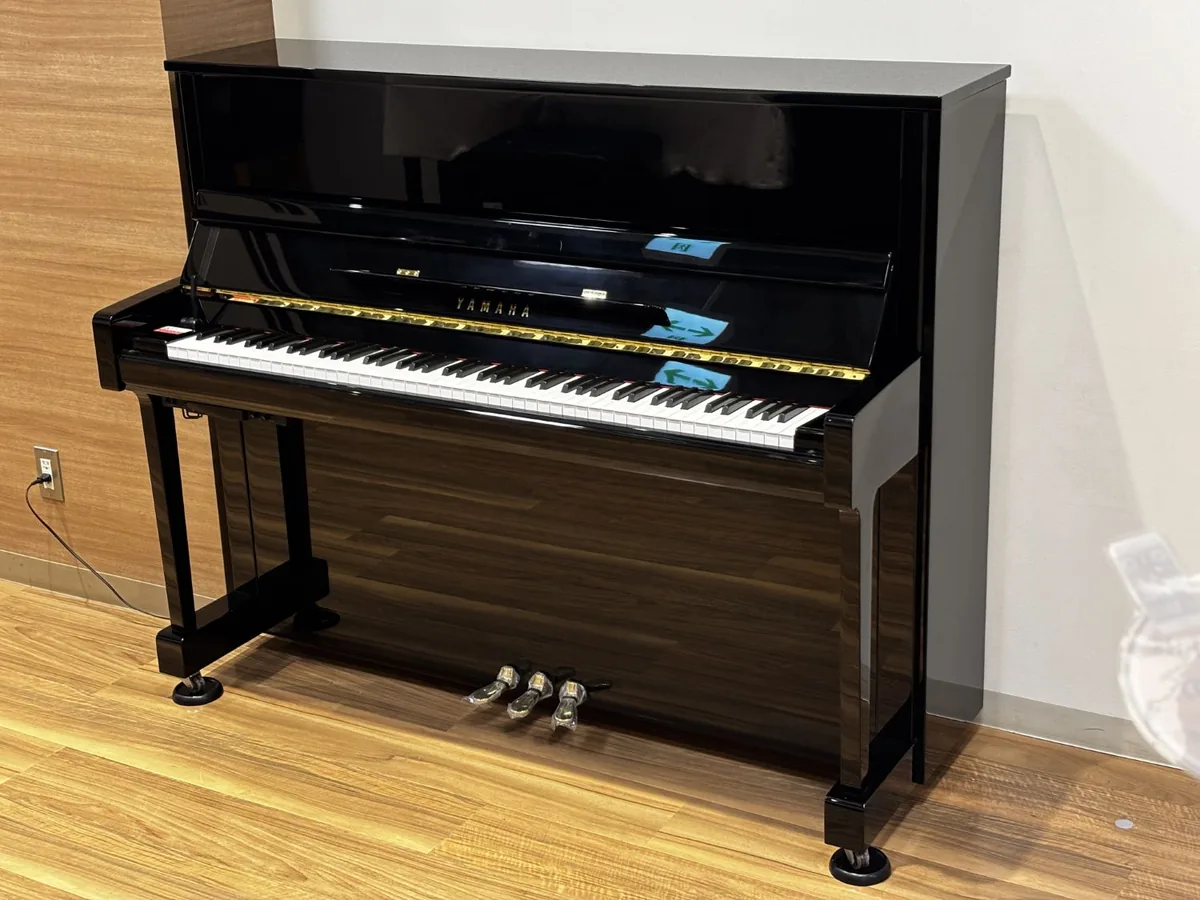
The pre-loved Yamaha uprights most people here are choosing between, the U and YU series, were built in Hamamatsu, Japan. The Yamaha piano Japan versus Indonesia question really applies to current entry models: the b series and the U1J are Indonesian. The plate inside the piano settles which you have.
I choose each piano in Japan myself, or through partners who know what I look for, and every instrument is photographed there before it is imported and checked in our Melbourne workshop. That means I spend a lot of time reading the small gold plate on the frame, because a piano bought in Japan was not necessarily built in Japan. The two questions are separate, and the trade often blurs them.
Which Yamaha uprights were built in Japan?
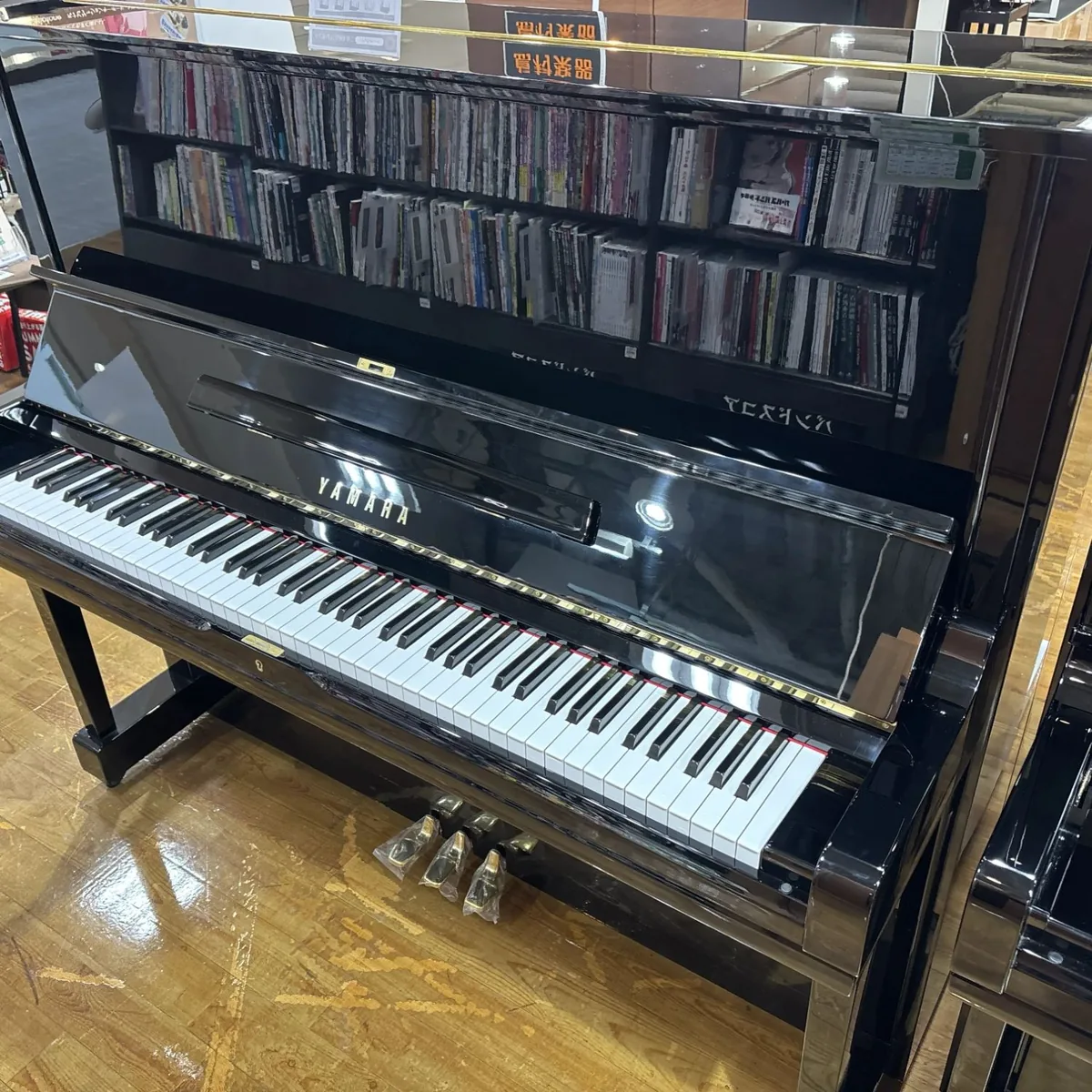
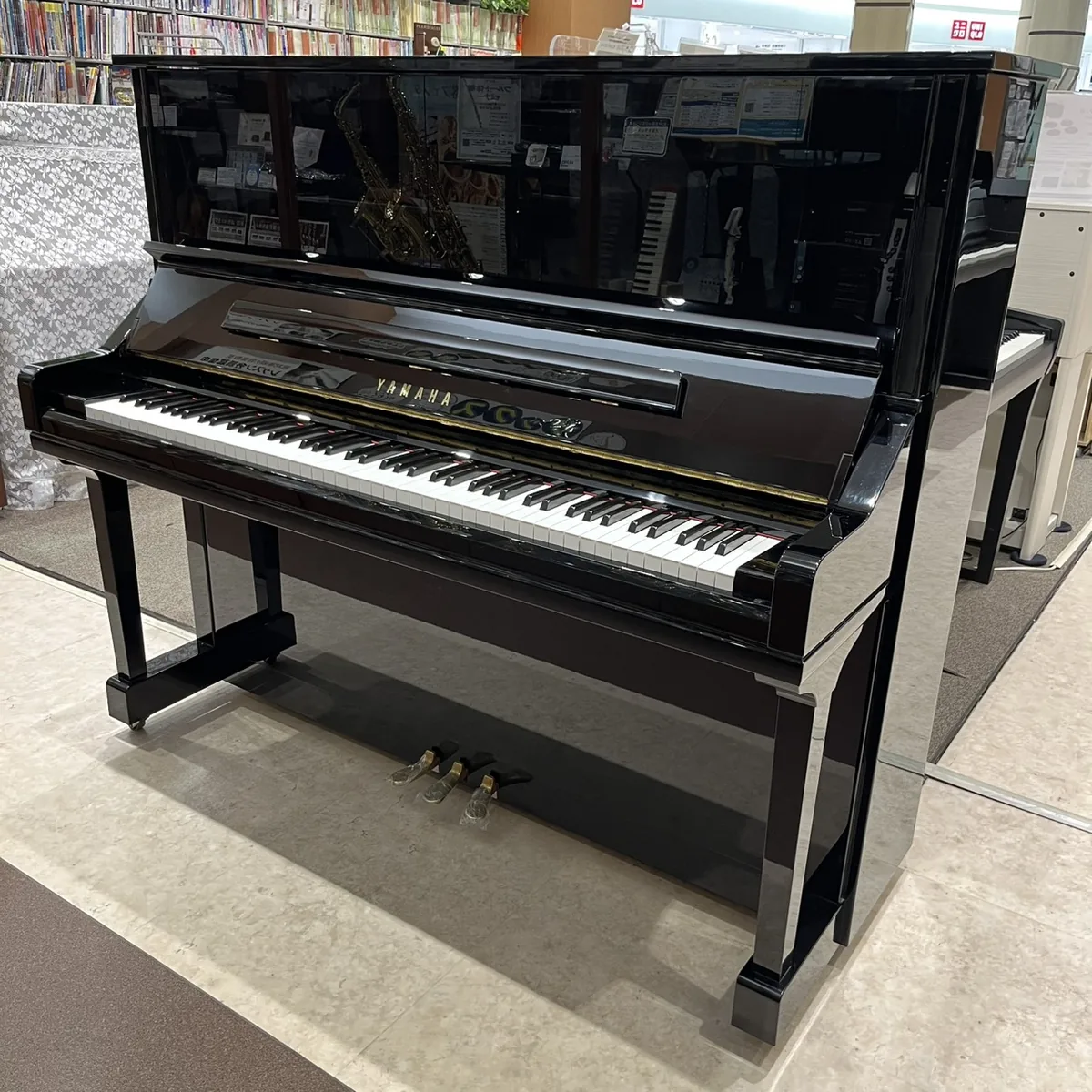
Yamaha has made pianos in several countries for decades, including Japan, Indonesia, China, Taiwan and, until about 2009, the United Kingdom. The division runs roughly along the model range. UK dealer Mark Goodwin Pianos, who handles these models daily, puts the U3, U30A, U30BL, UX and YU series in the always-Japanese column and says the B and P series are not Japanese-built. Looking at the U1 family specifically, the same dealer says of the U1A, U10A, U10BL, UX1, U100, YU1, YU10, YU1S and YUS that they all come from the Hamamatsu factory and none come from Yamaha's Indonesian plant.
That covers nearly everything a pre-loved buyer in Melbourne looks at. A 1981 U3H or a 1990s YU33 is a Hamamatsu piano. The model codes themselves tell you a great deal once you can read them, which is the subject of our guide to what the U3H and U3M codes mean.
What does the J in a Yamaha serial number mean?
This is where most advice online goes wrong, and the sources contradict each other openly. A J at the start of a Yamaha serial is widely read as Jakarta, Indonesia. Mark Goodwin Pianos points out that this is decided by the spacing: if there is a gap between the J and the digits on the frame, the piano was made in Japan, and if the J runs straight into the digits, it was made in Jakarta. The same page notes an H prefix for Hangzhou in China, YT for Taiwan on some mid-to-late 1990s U1 and U3 pianos, and E for the former UK factory, whose models usually carry an N suffix.
Two further traps. A letter that sits inside the model name is not a factory code: the H in U3H and the M in U3M are series markers, not Hangzhou and not a plant. And a serial number dates a piano; it does not tell you which market the piano was built for. If you want the year, our serial number lookup does that part for you.
U1 or U1J: what actually differs?
The U1J is a current model, and the Australian trade describes it as Indonesian. DW Music lists the Indonesian made U1J in polished ebony at $7,299 in October 2026, with other current U1 finishes on the same page running from about $11,299 upward. The listing does not say whether those figures include GST.
Set against that, the pre-loved U1 variants are older Hamamatsu instruments of a different age and condition entirely. The comparison is less about country than about what you are actually buying.
| What you are looking at | Current U1J | Pre-loved U1 family |
|---|---|---|
| Height | 121cm | 121cm |
| Where assembled | Indonesia, per the Australian listing | Hamamatsu, Japan, per the model records |
| Typical age | New | Roughly 1970s to 1990s |
| What decides the price | Finish and features | Condition, action wear and tuning history |
| How to confirm origin | Dealer listing and the plate | The plate on the frame, read in person |
Is the b121 a Japanese piano?
No. The b series is Yamaha's entry range and is not built in Japan. The dealer source above places the B and P series outside the Japanese-built list and says the B1 is usually made in Indonesia. If a seller tells you a b121 is a Japanese piano, ask them to show you where on the instrument it says so.
The honest summary is that the question matters most at the entry end of the current range, and hardly at all among the pre-loved U and YU models, where Hamamatsu is the answer either way.
Does the build country change how a piano plays?
Less than the internet suggests. Forum threads on this run on anecdote, and they disagree with each other: some players hear a clear difference, some technicians report Indonesian Yamahas lasting well. What is measurable is in front of you. A piano's touch and tone come from the condition of its hammers, strings, action regulation and soundboard, and a well-kept Indonesian-built instrument will outplay a Japanese-built one that spent twenty years beside a heater.
So treat origin as one line on a longer list, below condition, age and service history. It does matter for resale, because the Japanese-built models hold their name, and it matters if you are told one thing and sold another. Where the import route itself is the question, rather than the factory, that is a separate subject we cover in our guide to grey market Yamaha pianos.
Every piano I bring in has been through the plate check, so I can tell you what an instrument's serial actually says, and show you the frame while you look at it. You can see what we have at our instruments page, and the surest way to settle the question for a piano you are considering, pre-loved or second-hand as most people search it, is to read the plate yourself. Book a viewing in Mount Waverley and we will go through it together.
Questions people ask
Where are Yamaha pianos made?
Yamaha has built pianos in Japan, Indonesia, China, Taiwan and, until about 2009, the United Kingdom. The U3, U30A, U30BL, UX and YU series are Japanese-built, while the b and P series are not.
What is the difference between a U1 and a U1J?
The U1J is a current model that the Australian trade lists as Indonesian, while the pre-loved U1 variants are older Hamamatsu instruments. On a pre-loved piano the bigger difference is age and condition, not the factory.
Is the b121 made in Japan?
No. The b series is Yamaha's entry range and is not built in Japan, and the b1 is usually made in Indonesia. Ask a seller to show you where the instrument itself states its origin.
How can I tell where a piano was built?
Read the gold plate on the frame inside the top of an upright. On a Yamaha, a J running straight into the digits points to Jakarta and a J with a gap after it points to Japan, with H for China and YT for Taiwan.
Does it matter if my Yamaha was made in Indonesia?
Condition, action regulation and service history affect how a piano plays far more than the country of assembly. Origin matters mainly for resale value and for knowing that what you were told matches what you bought.