Buying a second-hand piano in Melbourne: a checklist
What to play, what to look at inside and what to ask before you pay for a pre-loved piano in Melbourne. A checklist you can take to any viewing.
Play it, look inside it, and know who stands behind it. That's the short version of buying a pre-loved piano, or a second-hand piano as most people search for it. Most pre-loved Yamahas for sale in Australia were built for the Japanese market (Yamaha Australia), and the checks below apply whether you're looking at a dealer's floor, a private listing or our showroom in Mount Waverley.
Our pianos are chosen in Japan, by me or by partners who know what I look for, and checked again in our workshop when they arrive, so this list is what we look for too. Print it, or keep it open on your phone while you play.
Before you go
Set a budget that includes the extras
The price of the piano isn't the whole cost. In 2026 a Melbourne technician put a tuning at $200 to $350 (Flow Piano), and one piano mover's published rates for a move ran from $260 to $420 (Harry the Piano Mover). Ask what's included in the price you're quoted. With us, delivery is white-glove and tracked in the customer portal, and your first tuning is included, three to four weeks after delivery.
Measure the room and the way in
Measure the wall where the piano will go, then the doorways, the hallway and any stairs on the way there. Uprights are heavy: a Yamaha U1 weighs about 228 kg and a U3 about 235 kg (Faust Harrison Pianos). Heights run from about 121 cm for a U1 to about 131 cm for a U3 (Churairat Music). If you're choosing between those two, our U1 vs U3 guide goes into the differences.
Bring the person who'll play it
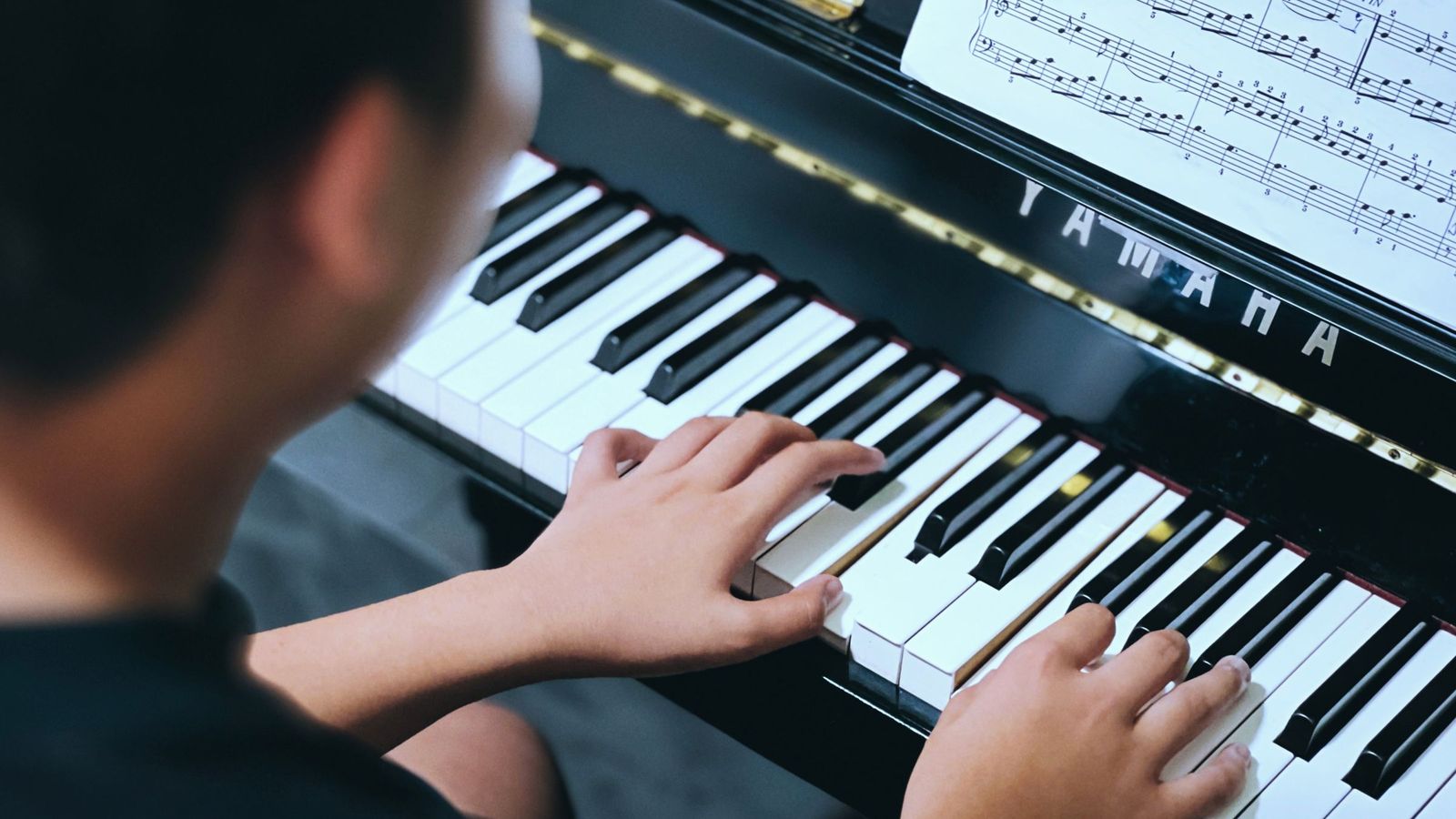
If the piano is for a child, bring them along. They're the one who'll sit at it every day, and how the keys feel under their hands matters as much as how the piano sounds to you.
Dealer or private seller?
This choice changes your rights. When you buy from a business, the consumer guarantees under the Australian Consumer Law apply, pre-loved goods included. When you buy privately, they don't (ACCC, consumer rights and guarantees). A private sale can still be a good piano, but if something turns out to be wrong after you've paid, you have much less to fall back on.
At the piano: what to check
Give yourself time. A good seller will expect you to play for a while and won't hurry you.
Play every key, softly and loudly
- Play each note from the bottom of the keyboard to the top, first softly, then loudly. The response should feel even, with no keys that are noticeably heavier, lighter or slower to come back up (Piano World forum).
- Listen for buzzing, rattles or clicks. Some are simple to fix and some point to wear. Either way, ask about them.
- Play something you know well, and some quiet chords. A piano that sounds fine loudly but feels uneven when you play softly is telling you about its regulation: how the action has been adjusted so every key behaves the same way.
- Try each pedal, and listen for squeaks or thumps.
Look inside
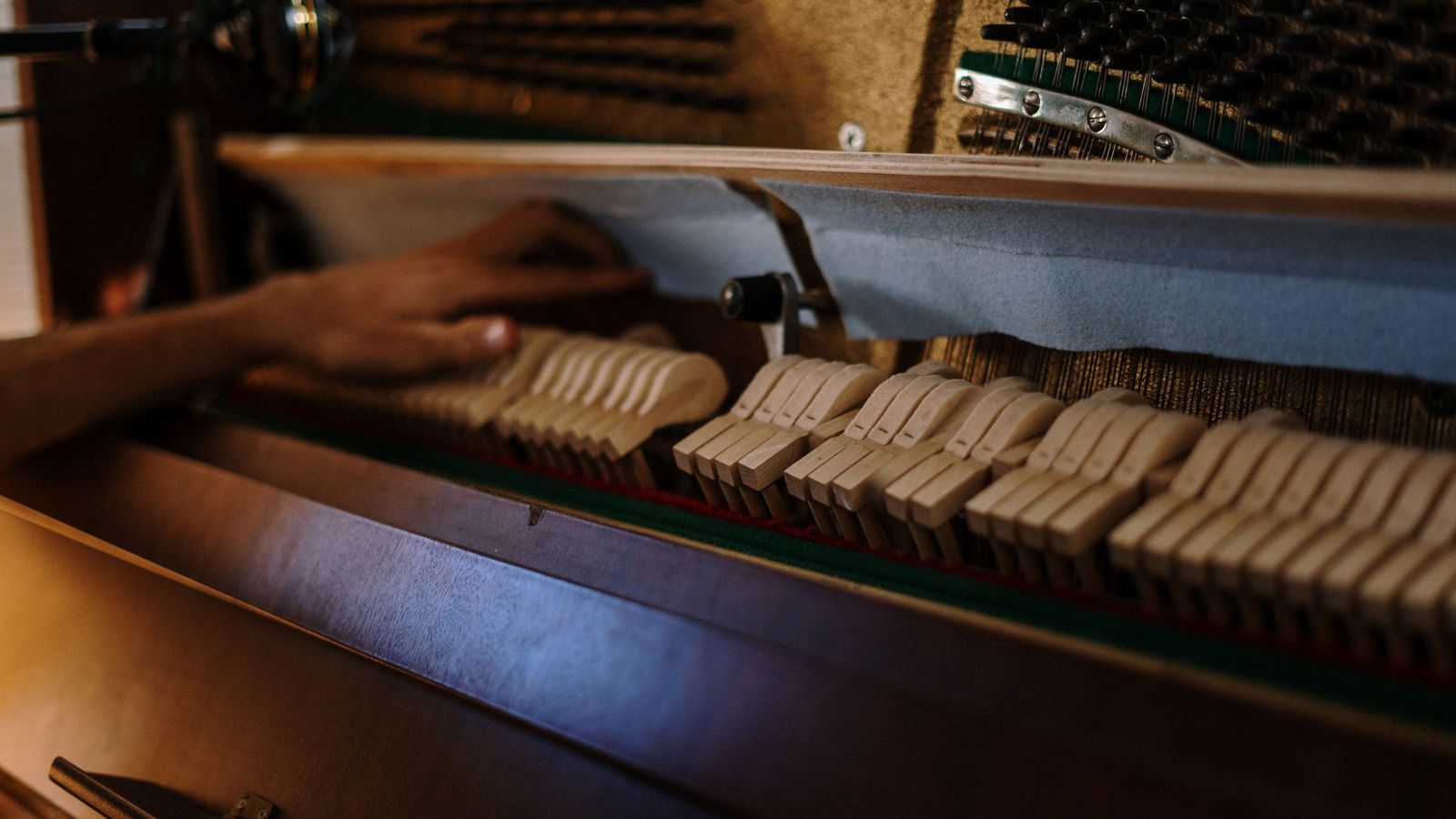
Ask the seller to open the lid and the front panel. You don't need to be a technician to notice the basics.
- Hammers. The felt-covered heads that strike the strings. Deep grooves or flattened tops are signs of wear (Piano World forum).
- Strings and tuning pins. The pins are what the strings wrap around at the top. Heavy rust, or pins that look out of line with their neighbours, are worth asking about.
- Bridges and soundboard. The soundboard is the large wooden panel behind the strings, and the bridges carry the strings' vibration into it. Cracks in either are a question for a technician (Piano World forum).
- Keys and case. Chipped keytops, a fallboard that drops hard or loose hinges are worth noting and asking about. They also tell you something about how the piano has been treated.
Check its age
On a Yamaha upright the serial number is usually inside the top lid, on the frame or on the plate (Yamaha USA). One specialist's table gives these reference points for Yamahas built in Japan: around 978000 in 1970, 3001000 in 1980, 4811000 in 1990, 5868000 in 2000 and 6280000 in 2010 (Mark Goodwin Pianos). Kawai uses its own system, and Kawai Australia explains where to find the serial and how to date it (Kawai Australia).
The serial dates the piano. It doesn't tell you how the piano was kept or which market it was first sold in.
Ask about its history
- Where did it come from, and is that written down anywhere?
- What work has been done since it arrived, such as tuning, regulation or new parts, and who did it?
- If it has a silent system, which lets you play through headphones, is it Yamaha's own factory SILENT system or one added later?
- Be careful with "one owner" or "never a school piano" unless the seller can show you how they know.
Should you bring a technician?
If you're not sure what you're hearing, yes. Yamaha Australia recommends having a technician inspect a pre-loved piano before you buy (Yamaha Australia), and Melbourne buyers on piano forums keep giving the same advice (Piano World forum, Whirlpool forums). One technician's published price for an independent appraisal was about $180 plus GST in September 2026 (Piano Doctor).
A teacher helps in a different way. If your child already has one, they know how a piano should feel under a student's hands, and they know your child. You're welcome to bring either to a viewing with us.
What happens at a Signature viewing
You book a private viewing at our showroom at 63 Blackburn Road, Mount Waverley, and play as many pianos as you like. We'll walk you through each one: its history, the restoration and workshop work done on it, its regulation and its touch. Every piano on the floor was chosen in Japan and checked in our workshop before it got there, and you can bring this checklist and use every line of it.
After you buy
- Delivery. White-glove delivery, booked and tracked in the customer portal, so you know when your piano is on its way.
- The first tuning. A piano needs time to settle after a move, and the usual advice is to wait somewhere between two and eight weeks before tuning (Moving Help). Your first tuning with us is included, three to four weeks after delivery.
- The warranty. A 10-year Signature Pianos warranty, which sits alongside your rights under the Australian Consumer Law rather than replacing them. Details are on our delivery and warranty page.
- Where it lives. Keep it away from heating vents, fireplaces and direct sun, and book regular tuning (tuning and servicing).
The checklist in one place
- Budget covers delivery and tuning
- Room, doorways and stairs measured
- Dealer or private: you know which rights apply
- Every key played softly and loudly, and the response is even
- No unexplained buzzing, rattles or sticking keys
- Every pedal tried
- Hammers, strings, tuning pins, bridges and soundboard looked at
- Serial number found and dated
- History, work done and any silent system explained
- Warranty: who backs it, and for how long
- First tuning: when, and whether it's included
- A technician's or teacher's opinion, if you're unsure
When you're ready to try it on real pianos, book a visit, or see what's in the showroom now. For more on imported Yamahas in particular, read our guide to grey market Yamaha pianos.
Questions people ask
What should I check when buying a pre-loved piano?
Play every key softly and loudly and listen for an even response. Listen for buzzing or rattles, try the pedals, and look at the hammers, strings, tuning pins, bridges and soundboard. Find the serial number to date it, and ask what work has been done.
Should I bring a technician to look at a piano?
If you're unsure what you're hearing, yes. Yamaha Australia recommends a technician's inspection before buying a pre-loved piano, and one technician listed an independent appraisal at about $180 plus GST in September 2026. You're welcome to bring a technician or your teacher to a viewing with us.
Is it better to buy from a dealer or a private seller?
Consumer guarantees under the Australian Consumer Law cover pre-loved goods bought from a business, but not private sales. A private piano can still be a good one, but you have fewer protections if something goes wrong.
How long should I spend playing a piano before buying it?
Long enough to play every note softly and loudly, try the pedals and play a piece you know. If you're buying for a child, have them play it too. A seller shouldn't hurry you.
When should a piano be tuned after delivery?
The usual advice is to let it settle for two to eight weeks after a move. At Signature Pianos, your first tuning is included three to four weeks after delivery.