Digital piano vs acoustic piano: which for a beginner?
Either instrument works for a beginner's first year. What decides it is the exam rules, the teacher's next ask, and how much dry winter air the house will tolerate.
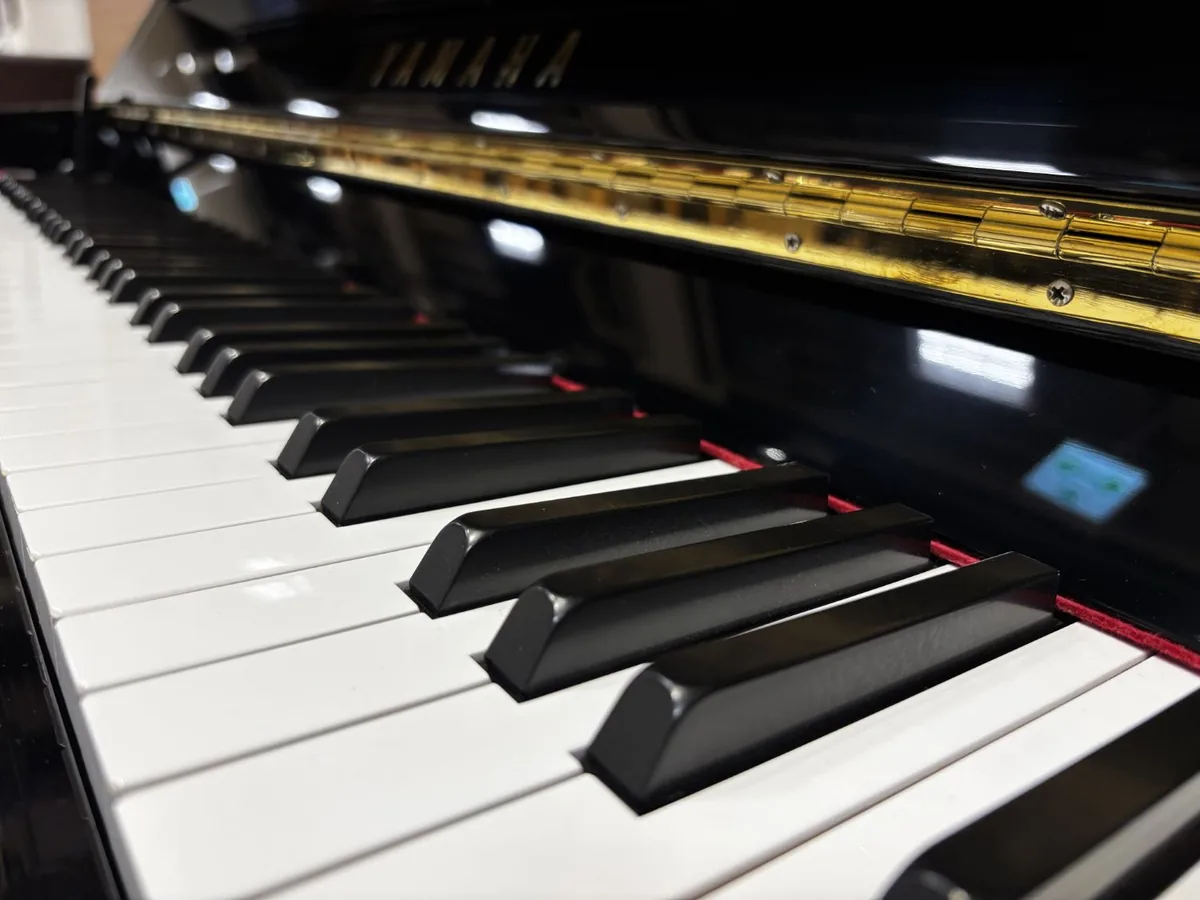
In the digital piano vs acoustic piano choice for a beginner, either one works for the first year or two. A weighted 88-note digital is enough to learn notes, rhythm and basic technique. An acoustic becomes the better instrument once a child practises daily, sits graded exams, or needs to control tone with the hands.
I am Eric Kuang. I choose the pre-loved Yamaha and Kawai uprights we sell in Japan, photograph them there before they are shipped, import them direct and have them checked in our Mount Waverley workshop. We do not sell digital pianos, so nothing here is written to move one off a floor.
Should a beginner start on a digital or an acoustic piano?
For the first six to twelve months of lessons the instrument matters less than three things: 88 notes, keys that are weighted, and keys that are touch sensitive, which means a soft press gives a soft note and a firm press a loud one. A 61-note keyboard with light plastic keys fails all three, and it is the choice most families later regret, because the child cannot practise dynamics and runs out of keys as the pieces spread across the keyboard.
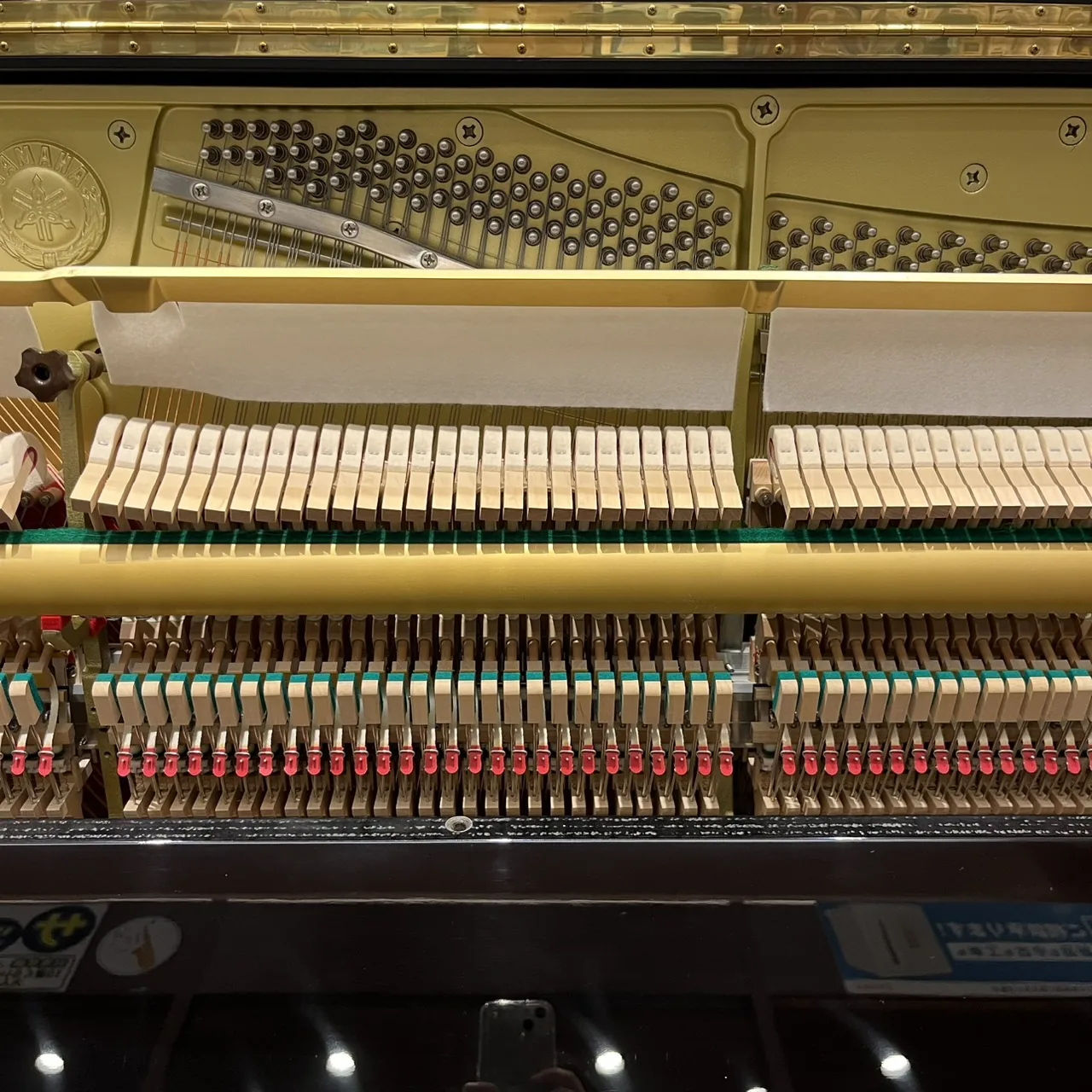
Past that first year the difference starts to show in the hands. On an acoustic, the key lifts a hammer through a mechanism called the action, and the player feels the hammer leave the key, so tone can be shaped by how fast the key is pressed and how it is released. A digital reproduces that feel approximately and reproduces the release not at all. A teacher usually notices it before a parent does.
| What matters | Weighted digital | Pre-loved acoustic |
|---|---|---|
| Touch and tone control | Close at the entry level, approximate under the fingers | The real mechanism, shaped by touch and release |
| Volume | Turn it down, or use headphones | Fixed, and it carries through walls and floors |
| Upkeep | None beyond power and a cover | Tuning once or twice a year, plus the occasional regulation |
| Indoor climate | Indifferent to a dry room | Needs the room watched through a heated winter |
| AMEB exams by video, Victoria | Piano syllabus to Grade 4 only; Piano for Leisure any grade | Accepted at every grade |
| Working life | Years, until the electronics or the action wear | Decades, and serviceable part by part |
Can you sit AMEB exams on a digital piano?
Only to a point, and the rule is narrower than most families expect. For exams by video, AMEB Victoria states that piano candidates may use a digital piano for Level 1, Preliminary to Grade 4, only, while Piano for Leisure candidates may use one for any grade. The instrument must have 88 notes, an action that is weighted and touch sensitive, and pedals that are fixed and function as they do on an acoustic piano. I read that page on 6 October 2026.
Read the pedal line twice, because it rules out most portable instruments. The Yamaha P-145, a common first digital, lists a single quarter-inch sustain pedal input rather than a fixed pedal unit, and was listed at $699 by Turramurra Music in October 2026. A console model with the pedals built into the stand is the shape that meets the AMEB wording, so check the pedals on the exact model before you buy.
Exam rules differ between state boards and change from year to year, so check your own board's page rather than a forum, and ask the teacher taking your child through the syllabus. The teachers who hold lessons near us are listed on our teachers page.
When does a child need an acoustic piano?
Three signals, in the order they usually arrive. The child practises most days without being asked, which means the instrument is being used rather than tolerated. The teacher starts talking about tone, dynamics or pedalling, which are the things a digital reproduces least well. And the child moves past Grade 4 in the Piano syllabus, where the digital allowance in the rules above stops.
Any one of those is reason enough to start looking. None of them means the digital was a mistake. A weighted digital that got a child through two years of lessons did its job, and plenty of families keep it in a bedroom for late practice after the acoustic arrives.
What should I spend on a first piano?
At the entry level, a portable 88-note weighted digital sits around $699, as above. A console digital with a stand and built-in pedals is roughly double that: the Yamaha YDP-145 was listed at $1,669 by Music Junction in October 2026, with 88 keys and a graded hammer weighted action. Neither price included delivery, and neither page stated whether GST was included, though advertised Australian retail prices are required to show the total price a customer pays.
A pre-loved Japanese upright is the next step up, and the Australian dealer listings we track are set out in our guide to pre-loved Yamaha prices. Budget for the running costs as well, which are tuning once or twice a year and a regulation every few years. Our guide to tuning costs in Melbourne has current rates, and when a piano leaves us the first tuning is included, three to four weeks after delivery, once the instrument has settled into the room.
One honest comparison of total cost: a digital is cheaper to own and holds less value, and an acoustic costs more to own and can be sold on or passed down. Which of those matters depends on whether you expect the lessons to last.
Does a Melbourne winter change the answer?
It is the one argument for a digital that acoustic dealers tend to skip. A digital piano does not care how dry a room gets. An acoustic does, because ducted heating pulls indoor humidity down for months at a time and the timber in the soundboard and action responds to it. That is managed rather than avoided, with placement away from vents and direct sun and, in a dry house, a room humidifier. We set out what to watch in our guide to piano humidity in Australia. If nobody in the house is prepared to think about it, that is worth knowing before an acoustic arrives rather than after.
How to decide without guessing
Ask your child's teacher what they want the home instrument to do this year, then match it to the list of three requirements at the top: 88 notes, weighted, touch sensitive. If a digital clears that bar and the budget, start there. If the practice is already daily and the teacher is talking about tone, come and play a few pre-loved uprights before you spend anything, because the difference between a 1980s Yamaha U1H and a console digital is something the hands settle in about a minute.
Our instruments listing is the place to start looking, and the useful next step is to play a few. Book a visit to our Mount Waverley showroom, bring the child, and let the hands decide.
Questions people ask
Should a beginner start on a digital or an acoustic piano?
Either works for the first year, as long as the instrument has 88 notes and keys that are weighted and touch sensitive. A 61-note keyboard with light keys is the choice that holds a child back.
When does a child need an acoustic piano?
When practice has become daily, when the teacher starts asking for tone, dynamics and pedalling, or when the child moves past Grade 4 in the AMEB Piano syllabus, where the digital allowance for exams by video stops.
Can you sit AMEB exams on a digital piano?
For exams by video in Victoria, piano candidates may use a digital piano to Grade 4 only, and Piano for Leisure candidates at any grade, with 88 notes, a weighted touch-sensitive action and fixed working pedals. Rules differ by state and change, so check your own board.
What should I spend on a first piano?
A portable weighted digital was listed at $699 and a console model at $1,669 in October 2026, before delivery. A pre-loved Japanese upright costs more to buy and more to keep, and holds its value better.
Do digital pianos cope better with Melbourne heating?
Yes, a digital is indifferent to a dry room, while an acoustic responds to the indoor dryness that ducted heating causes through winter. That is managed with placement and room humidity rather than avoided.